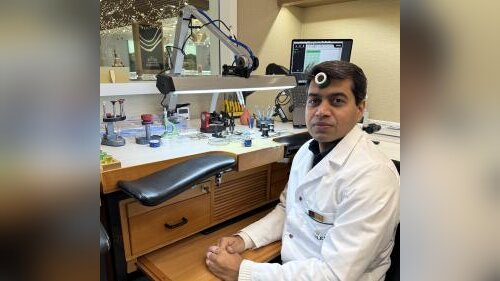
Behind every polished luxury watch is a universe of tiny, precisely engineered parts. And as certified watchmaker Suleman Qureshi makes clear, restoring these intricate machines is far more complex than simply swapping out worn pieces or tweaking the timekeeping.
Suleman Qureshi examines the technical expertise, precise diagnosis and specialized skills required for reliable luxury mechanical watch restoration.
True watchmaking expertise goes beyond accurate timekeeping. It requires understanding the entire movement, identifying underlying mechanical issues, and ensuring long-term reliability.”— Suleman Qureshi, Certified Watchmaker
Even a minor deviation in a mechanical watch’s internal condition can ripple through its performance, reliability, and lifespan. That’s why Qureshi, a certified watchmaker at Suleman Qureshi, insists that true restoration demands a systematic approach—one that goes far beyond surface-level fixes.
Also worth a look: Oriental Artisan redefines holiday gifting around daily rituals, not just objects and Liberian-born entrepreneur Nouho M Kanneh on $37M fortune: ‘I don’t chase attention’.
With nearly two decades of experience spanning the United Arab Emirates and the United States, Qureshi has honed his craft servicing Swiss mechanical watches. His expertise is backed by advanced technical training with Rolex, Audemars Piguet, and Chopard.
The Complexity Behind Mechanical Watch Restoration
A mechanical watch movement is a dense network of interacting components, all operating within extremely tight tolerances. Over time, lubrication breaks down, components wear, and exposure to impacts or the environment can throw everything off.
According to Qureshi, the key to effective restoration is understanding the movement’s overall mechanical condition—not just chasing individual symptoms. For instance, if a watch is running irregularly, the problem might not be in the regulating mechanism at all. Variations in amplitude, friction, lubrication, or the power-transmission system could be the real culprits.
Even a chronograph that appears to work fine may hide issues with engagement, synchronization, or other internal mechanisms. That’s why comprehensive diagnosis is the cornerstone of professional watch servicing.
Why Precision Alone Is Not Enough
Precision is the heart of horology, but accurate timekeeping is just one piece of the puzzle. A properly serviced movement must also deliver consistent operation, appropriate amplitude, reliable power, and correct functioning of all complications.
Professional watchmakers evaluate these characteristics throughout the entire servicing process—after cleaning, lubrication, reassembly, and final adjustment. For Qureshi, the goal isn’t just a good reading on a timing machine; it’s ensuring the entire movement works as an integrated mechanical system within the manufacturer’s technical standards.
Preserving Component Integrity and Mechanical Reliability
One of the toughest parts of luxury watch restoration is deciding which parts can stay and which must go. Wear patterns, surface condition, tolerances, and how components interact all influence repair decisions. While replacement is sometimes necessary, swapping parts without proper evaluation is not a substitute for real technical judgment.
Experienced watchmakers must distinguish between parts that need replacing, those that are still serviceable, and signs that point to a deeper mechanical issue. This is especially critical for complex movements with chronographs, calendars, and other complications. The right call depends on the manufacturer’s specs, parts availability, and how the watch will be used.
The Importance of Manufacturer-Specific Technical Training
Swiss watchmakers design movements with unique engineering, service procedures, lubrication needs, and adjustment standards. That means professional competence requires both broad mechanical knowledge and deep familiarity with specific movement families.
Qureshi’s technical background includes advanced Rolex chronograph training in Geneva, additional Rolex technical training in New York covering modern calibers like the 2236 and 32xx series, specialized Audemars Piguet movement training in Switzerland, and advanced Chopard technical education in Geneva. These programs have shaped his understanding of complex movement architecture, diagnostics, and manufacturer-specific practices.
His career also includes technical leadership in Dubai’s luxury watch industry, where he oversaw multidisciplinary service operations before continuing his watchmaking journey in Michigan.
The Role of Modern Diagnostic Technology
Today’s watchmaking equipment—electronic timing instruments, pressure testers, and specialized diagnostic tools—gives technicians powerful data to assess performance and spot inconsistencies. But Qureshi stresses that these readings must be interpreted within the broader mechanical context. A timing result alone can’t reveal the condition of every internal component, just as a successful pressure test doesn’t guarantee the movement was serviced correctly. Professional judgment is still essential to determine what the measurements really mean and whether additional inspection or correction is needed.
A Discipline Built on Technical Accountability
Luxury watch restoration blends traditional craftsmanship with modern technical standards. It demands careful observation, consistent procedures, proper tooling, and a deep understanding of how each component affects the whole movement.
Qureshi currently works as a Rolex Certified Watchmaker at Tapper’s Jewelry in Michigan, applying his international experience within a Rolex authorized service environment. His professional philosophy is clear: successful restoration should be judged not just by immediate performance, but by the mechanical integrity and reliability achieved through the entire process.
As mechanical watches continue to captivate collectors and enthusiasts, the specialized expertise needed to maintain them is essential to preserving the craftsmanship and engineering that define Swiss horology.
About Suleman Qureshi
Suleman Qureshi is a certified luxury watchmaker and accredited horologist with nearly two decades of international professional experience. His technical qualifications include specialized training with Rolex, Audemars Piguet and Chopard. He previously held senior technical and management positions in Dubai and currently works as a Rolex Certified Watchmaker at Tapper’s Jewelry in Michigan.
Suleman Qureshi
Swiss-Accredited Luxury Watchmaker
Why it matters: As the market for luxury mechanical watches continues to grow, the demand for properly trained, manufacturer-certified watchmakers is more critical than ever. Without this specialized expertise, even the finest timepieces risk losing the mechanical integrity that makes them valuable in the first place.