
The cargo aircraft leasing industry is no longer a niche corner of aviation finance—it has become a critical gear in the global logistics machine. With e-commerce sales in the U.S. alone topping $1.1 trillion in 2023 and cross-border trade accelerating, the ability to add freight capacity without buying planes outright has never been more valuable. New data from The Business Research Company lays out just how fast this market is climbing and where the next wave of growth will come from.
The Business Research Company’s Cargo Aircraft Leasing Global Market Report 2026 – Market Size, Trends, And Forecast 2026-2035
The cargo aircraft leasing industry has experienced significant growth recently, reflecting the rising importance of flexible air freight solutions in the global logistics landscape. As e-commerce and international trade continue to expand, this sector is poised for further development. Let’s explore the current market size, the factors driving growth, regional prospects, and emerging trends shaping this dynamic industry.
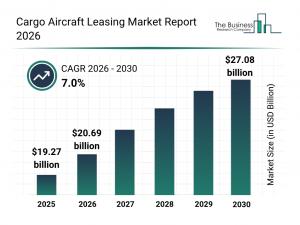
According to the latest research, the cargo aircraft leasing market was valued at $19.27 billion in 2025 and is forecast to reach $20.69 billion in 2026, representing a compound annual growth rate of 7.4%. That expansion is not a fluke. Analysts point to surging air freight demand, the relentless rise of e-commerce shipments, higher volumes of international trade, the need for adaptable fleet capacity, and a growing preference among operators for asset-light fleet management as the key forces behind the numbers.
Download a free sample of the cargo aircraft leasing market report:
https://www.thebusinessresearchcompany.com/sample_request?id=23196666&type=smp&name=Cargo%20Aircraft%20Leasing%20Market%20Report%202026&utm_source=EINPresswire&utm_medium=Paid&utm_campaign=Oct_PR
The momentum is expected to hold steady through the rest of the decade. The report projects the market will reach $27.08 billion by 2030, with a CAGR of 7.0%. What will drive that continued growth? The list includes expanding cross-border e-commerce operations, growing demand for expedited freight transport, wider adoption of flexible leasing models, global cargo aviation capacity expansion, and a sharper focus on fleet optimization and capital efficiency. On the trend side, the report highlights a shift toward flexible aircraft leasing agreements, a rise in short-term cargo fleet rentals, increased interest in dry leasing arrangements, and a broader move to expand fleets without outright ownership as a way to better manage seasonal freight swings.
For those unfamiliar with the model, cargo aircraft leasing is exactly what it sounds like: companies lease cargo planes to operators under contractual agreements, giving them access to aircraft without the massive upfront cost of a purchase. This setup supports air freight operations by providing flexible fleet capacity that can adjust to shifting transportation demand. It helps operators sidestep large capital outlays while maximizing how often their aircraft are in use. By leasing planes for specific terms, companies can manage cargo transport more efficiently and respond to market changes on the fly.
View the full cargo aircraft leasing market report:
https://www.thebusinessresearchcompany.com/report/cargo-aircraft-leasing-market-report?utm_source=EINPresswire&utm_medium=Paid&utm_campaign=Oct_PR
Perhaps no single factor is pushing this market harder than e-commerce logistics. The entire process of storing, handling, transporting, and delivering goods bought online—all within tight delivery windows—has become a massive engine for cargo aircraft demand. Consumers now expect speed and reliability as a baseline, and retailers and logistics firms are racing to expand their warehousing, transportation, and last-mile delivery networks to meet those expectations. Cargo aircraft leasing gives them a way to scale up fleet capacity quickly without the heavy investment required to buy planes, helping them handle fluctuating demand more effectively. A telling data point: in February 2024, the U.S. Census Bureau reported that total U.S. e-commerce sales hit $1,118.7 billion in 2023, a 7.6% increase over the prior year. That kind of growth translates directly into more demand for leased cargo aircraft.
Geographically, North America held the largest share of the cargo aircraft leasing market in 2025, a reflection of its mature logistics infrastructure and high demand for air freight services. But the fastest growth over the forecast period is expected to come from the Asia-Pacific region. The report covers a broad range of markets, including Asia-Pacific, South East Asia, Western Europe, Eastern Europe, North America, South America, the Middle East, and Africa, offering a wide-angle view of where opportunities are emerging.
New analytical features added to our 2026 market reports:
• Market attractiveness scoring and analysis
• Total addressable market (TAM) analysis
• Company scoring matrix graphics and tables
• Excel-based forecasting dashboards
• Market hotspots infographics
• Key technologies and future trend analysis
• Updated graphics and tables
Speak With Our Expert:
Saumya Sahay
Americas +1 310-496-7795
Asia +44 7882 955267 & +91 8897263534
Europe +44 7882 955267
Email: marketing@tbrc.info
The Business Research Company – www.thebusinessresearchcompany.com
Follow Us On:
• LinkedIn: https://in.linkedin.com/company/the-business-research-company
Oliver Guirdham
The Business Research Company
+44 7882 955267
info@tbrc.info
Visit us on social media:
LinkedIn
Facebook
X
Why it matters: As e-commerce reshapes consumer expectations and global supply chains strain for speed, the ability to lease cargo aircraft on flexible terms is becoming a strategic necessity rather than a financial convenience. This market’s steady climb signals a broader structural shift away from asset-heavy logistics models toward more agile, capital-efficient operations that can scale with demand.