Bioreactor technology is no longer just a niche laboratory tool — it has become the backbone of modern biopharmaceutical manufacturing, and the numbers behind its expansion tell a compelling story. With global pharmaceutical spending on the rise and personalized medicine gaining traction, the systems that grow cells and microorganisms for therapeutic production are moving into a phase of accelerated commercial relevance.

The Business Research Company’s Bioreactors Market Global Market Report 2026 – Market Size, Trends, And Forecast 2026-2035
The bioreactors market is experiencing rapid momentum as biotech and pharmaceutical manufacturing evolve at an unprecedented pace. The push for more efficient, scalable production methods is opening new avenues for growth across the sector. Here’s a closer look at the current valuation, the forces driving expansion, regional patterns, and the innovations expected to define the next several years.
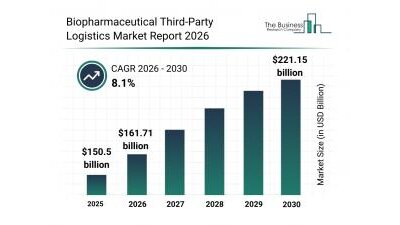
Also worth a look: Biopharma logistics outsourcing market to hit $221 billion by 2030 as cold chain demand surges and Bone grafts market set to hit $4.72B by 2030 as surgical demand surges.
Market Size: Past, Present, and Projected Trajectory
The sector has already posted impressive gains in the recent period. Valued at $10.61 billion in 2025, the market is expected to climb to $12.2 billion in 2026 — a compound annual growth rate (CAGR) of 15.0%. That upward momentum traces back to several converging factors: the broadening scope of biologics manufacturing, increased reliance on fermentation-based methods, wider implementation of fed-batch processes, growing capital inflows into biopharmaceutical R&D, and continued advances in bioprocess control systems.
Access a complimentary sample of the market report here:
https://thebusinessresearchcompany.com/sample_request?id=14669611&type=smp&name=Bioreactors%20Market%20Report%202026&utm_source=EINPresswire&utm_medium=Paid&utm_campaign=Nov_PR
Longer-range forecasts point to even more pronounced gains. By 2030, the market is projected to reach $21.03 billion, reflecting a CAGR of 14.6%. The anticipated growth is tied to several structural shifts: heightened demand for high-yield bioprocessing, the scale-up of personalized medicine manufacturing, deeper integration of AI-driven process optimization, a sharper focus on operational efficiency, and the move toward continuous manufacturing workflows. Among the notable industry trends are the rising deployment of automated bioreactor systems, the advance of continuous bioprocessing technologies, the growing appeal of scalable bioreactor platforms, the widening use of single-use solutions, and a stronger emphasis on real-time process monitoring and control.
What Exactly Is a Bioreactor?
At its core, a bioreactor is a purpose-built system designed to maintain biological processes by providing a controlled environment where cells, microorganisms, or enzymes can carry out specific biochemical reactions. Temperature, pH, oxygen levels, and nutrient delivery are all carefully managed to ensure optimal conditions. These systems are integral to pharmaceuticals, food manufacturing, and wastewater treatment — sectors where controlled biological activity is fundamental to production.
Review the complete market report here:
https://thebusinessresearchcompany.com/report/bioreactors-global-market-report?utm_source=EINPresswire&utm_medium=Paid&utm_campaign=Nov_PR
Biopharmaceutical Demand: The Central Growth Engine
Perhaps the single most influential driver of bioreactor market growth is the escalating need for biopharmaceuticals — medicinal products derived from biological sources such as proteins, cells, and living organisms, used to prevent or treat disease. That demand is being fueled by breakthroughs in medical research, the expansion of personalized treatment approaches, and the ongoing search for novel therapeutic options, all of which are improving health outcomes worldwide. Bioreactors are central to this equation, enabling efficient, scalable production of these therapies while preserving quality, reducing costs, and accelerating the path to market for new medicines.
Evidence of this trend comes from the Organisation for Economic Cooperation and Development (OECD), a France-based intergovernmental body. In November 2025, the OECD reported that per capita spending on retail pharmaceuticals across its member countries averaged USD 766 in 2023, adjusted for purchasing power. That level of spending underscores robust demand — and that demand is a key reason the bioreactors market continues to expand.
Regional Dynamics: Who Leads, Who’s Catching Up
North America held the largest share of the bioreactors market in 2025, a reflection of its sophisticated biotech infrastructure and mature pharmaceutical industry. Yet the fastest growth over the forecast window is expected in Asia-Pacific, where rising investment in biopharmaceutical manufacturing, rapid technology uptake, and expanding healthcare systems are creating fertile ground for expansion. The report covers all major regions — Asia-Pacific, South East Asia, Western Europe, Eastern Europe, North America, South America, the Middle East, and Africa — providing a full picture of global market dynamics.
The 2026 edition of the market reports adds broader strategic value through market attractiveness scoring, total addressable market (TAM) analysis, company scoring matrices, Excel-based forecasting dashboards, market hotspots infographics, and updated analysis of key technologies and future trends — all supported by refreshed graphics and tables.
Talk to Our Expert:
Saumya Sahay
Americas +1 310-496-7795
Asia +44 7882 955267 & +91 8897263534
Europe +44 7882 955267
Email: marketing@tbrc.info
The Business Research Company – www.thebusinessresearchcompany.com
Follow Us On:
• LinkedIn: https://in.linkedin.com/company/the-business-research-company
Oliver Guirdham
The Business Research Company
+44 7882 955267
info@tbrc.info
Visit us on social media:
LinkedIn
Facebook
X
Why it matters: The bioreactor market’s projected doubling in size over the next five years signals more than just industry growth — it points to a fundamental shift in how life-saving therapies are produced at scale. For investors, manufacturers, and healthcare stakeholders, the convergence of AI, continuous processing, and single-use technologies will likely redefine competitive advantage and reshape the pharmaceutical supply chain.