For decades, Nepal’s brick industry has been a major source of air pollution and carbon emissions, but a new $60 million financing deal seeks to change that equation entirely. The climate technology company InnoCSR, creator of Good Bricks Technology, has teamed up with Hulas Eco Bricks—backed by the Diwakar Golchha Organisation—to fund a sweeping industrial transition away from coal-fired kilns.
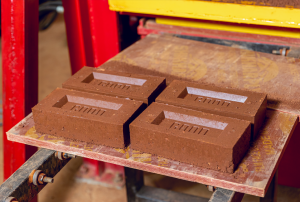
Good Bricks are manufactured using locally available soil, cement and InnoCSR’s proprietary Good Soil Stabilizer for exceptional strength and finishing.
300 production sites targeted by 2030, accelerating industrial decarbonization and supporting Nepal’s transition to sustainable manufacturing
Also worth a look: Oriental Artisan redefines holiday gifting around daily rituals, not just objects and Liberian-born entrepreneur Nouho M Kanneh on $37M fortune: ‘I don’t chase attention’.
By combining carbon finance, proven technology and strong local partnerships, Nepal can demonstrate how an entire industry can transition towards sustainable manufacturing.”— Sam Yoonsuk Lee
The announcement came soon after the signing of the Framework Agreement for Cooperation on Climate Change between the governments of South Korea and Nepal. The initiative intends to deploy Good Bricks Technology across 300 production sites by 2030, providing participating manufacturers with hydraulic brick-press machinery and market support valued at roughly US$200,000 per site. By leveraging future carbon credits, the programme aims to drastically lower the upfront investment typically required from local producers. Carbon financing is being supplied by major global investors including the Asian Development Bank, NH Investment and Securities, and Korea Western Power. Adopting this technology, manufacturers can boost their long-term competitiveness while preparing for tightening environmental regulations on traditional brick production. At full capacity, the planned network could produce roughly 3 billion nonfired bricks each year, potentially avoiding 1.5 million tons of CO₂ emissions annually compared with conventional fired-brick methods.
“Developing cleaner technology is only half the challenge. The real breakthrough is making it commercially accessible to the existing industry,” said InnoCSR Founder and CEO, Sam Yoonsuk Lee. “By combining carbon finance, proven technology and strong local partnerships, Nepal can demonstrate how an entire industry can transition towards sustainable manufacturing.”
Unlike conventional coal-fired bricks, Good Bricks are made from locally available soil, cement, and InnoCSR’s proprietary Good Soil Stabilizer. Hydraulic machinery compresses the materials, eliminating the need for kiln firing entirely. Good Bricks Technology is positioned as the only scalable alternative capable of matching the existing brick industry on three critical measures—price, quality and production capacity—while simultaneously reducing carbon emissions and air pollution. Hulas Eco Bricks will lead the nationwide expansion, drawing on the Diwakar Golchha Organisation’s established industrial network, while InnoCSR supplies the technology.
“This partnership is about making modern brick manufacturing accessible to Nepalese entrepreneurs,” said Hitesh Golchha, Director of Diwakar Golchha Organisation. “Together, we aim to build a cleaner, more competitive brick industry that benefits both businesses and the environment.”
By connecting international carbon finance with local manufacturing, the programme aims to become one of Nepal’s largest industrial carbon-financing initiatives, positioning Nepal as a regional leader in climate-friendly construction materials.
Why it matters: This deal offers a rare blueprint for how carbon credits can directly pay for the retooling of a polluting industry in a developing economy. If it succeeds, Nepal’s brick sector could slash emissions by 1.5 million tons annually while keeping production costs competitive—a model other nations may soon try to replicate.
Farah Sayegh
InnoCSR
marcom@innocsr.com