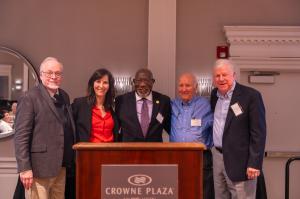
When a field reaches a 30-year milestone, it’s worth pausing to consider not just where it’s been, but who carried it there. That was the dual mission of the New York State Dispute Resolution Association’s (NYSDRA) 2026 Annual Conference, which convened practitioners and court leaders in Albany this October to honor the architects of community mediation while seeding its next chapter.
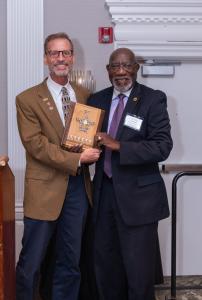
Lou Gieszl, Assistant State Court Administrator for Programs for the Maryland Judiciary, accepting the Tree of Peace Plaque for the Maryland Judiciary’s Mediation and Conflict Resolution Office (MACRO), the 2026 recipient of the Andrew Thomas Peacebuilder Award.
George Cooke, son of Chief Judge Lawrence Cooke and Ambassador of the Lawrence H. Cooke Dispute Resolution Legacy Fund.
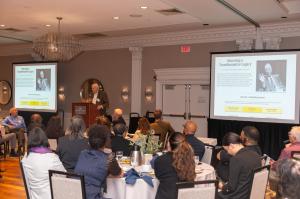
“Rooted in Peace” conference brought New York’s dispute resolution community together to honor its history, celebrate today, and invest in the field’s future.
This conference gave us an extraordinary opportunity to bring generations of the dispute resolution community together.”— Theresa Hobbs, Executive Director of NYSDRAALBANY, NY, UNITED STATES, October 22, 2026 /EINPresswire.com/ — The annual gathering, themed “Rooted in Peace: One Tree, Many Branches,” unfolded over two days beginning October 8, both virtually and at The Desmond Hotel in Albany. It drew dispute resolution professionals, community mediators, court leaders, educators, attorneys, volunteers, and emerging practitioners from across New York and beyond.
The program blended professional development with a look back at the institutions and individuals who shaped community dispute resolution in the state. More than 20 sessions tackled topics as varied as artificial intelligence, ethics, polarization, practitioner well-being, the arrival of new generations in ADR, and community-based peacebuilding.
It was the second day, however, that turned into a heartfelt commemoration of the field’s past, present, and future.
The conference assembled a group of distinguished figures whose influence dates back to the earliest days of community dispute resolution in New York. Honorees included Andrew Thomas, NYSDRA’s founding Board President, Co-Chair of the National Association for Community Mediation, and co-founder of Rochester’s Center for Dispute Settlement—the state’s first community mediation center; Tom Christian, who served as the founding State Director of New York’s Community Dispute Resolution Centers (CDRC) Program in the early 1980s; Mark Collins, a three-decade champion of alternative dispute resolution within the New York State Unified Court System; and John McCullough, one of the CDRC network’s longest-serving Executive Directors. Mark Kleiman, founding Executive Director of Community Mediation Services in Queens and recipient of the 2011 Lawrence H. Cooke Peace Innovator Award, was also in attendance. Their collective contributions continue to inspire today’s practitioners.
Lisa M. Courtney, Esq., Director of the Division of Alternative Dispute Resolution for the New York State Unified Court System, shared remarks on how dispute resolution has been stewarded and evolved within the courts—including the groundwork that eventually led to ADR becoming its own division—and offered a forward-looking view of the field’s development.
The luncheon also recognized three decades of NYSDRA’s administration of the Lemon Law Arbitration Program. Mel Goldberg offered a poignant tribute to the program’s history and to the colleagues who helped shape it.
At the heart of the Celebration & Awards Luncheon was the 30th anniversary of the Andrew Thomas PeaceBuilder Award, established in 1996 to honor individuals and organizations demonstrating a sustained commitment to peacebuilding and constructive conflict resolution.
In a fitting twist, Andrew Thomas himself—NYSDRA’s founding Board President and a pioneering community mediation leader—personally presented the 2026 award bearing his name to the Maryland Judiciary’s Mediation and Conflict Resolution Office (MACRO).
Lou Gieszl, Assistant State Court Administrator for Programs for the Maryland Judiciary and a longtime leader in MACRO’s development, traveled to Albany to accept the award on the organization’s behalf, while MACRO team members joined the celebration virtually from Maryland.
The award took the form of a distinctive plaque depicting the Haudenosaunee Tree of Peace, a symbol of peace and unity that resonated deeply with the conference’s “Rooted in Peace” theme.
The Tree of Peace also tied the award to its origins. The first Andrew Thomas PeaceBuilder Award was presented in 1996 to Tekaronianeken Jake Swamp, Sub-chief of the Wolf Clan of the Mohawk Nation, giving the 30th-anniversary presentation a particularly rich historical resonance.
The luncheon then pivoted from honoring history to investing in the future with the public launch of the Lawrence H. Cooke Dispute Resolution Legacy Fund. NYSDRA’s campaign aims to establish a $1.5 million permanent endowment over three years to bolster community-based dispute resolution across New York State.
The Fund is named for former New York Court of Appeals Chief Judge Lawrence H. Cooke, whose vision helped lay the foundation for the state’s Community Dispute Resolution Center Program. It is designed to create a lasting resource ensuring accessible community dispute resolution remains available for generations to come.
The Honorable Lawrence K. Marks, former Chief Administrative Judge of the New York State Unified Court System and Campaign Chair for the Legacy Fund, addressed attendees by video, underscoring the importance of preserving and strengthening Judge Cooke’s vision.
The launch also featured the unveiling of NYSDRA’s Founding Donor Tree, which recognizes the individuals and organizations whose early commitments helped establish the Fund. Each named leaf represents a Founding Donor, transforming the conference’s tree imagery into a tangible sign of community investment in the future of dispute resolution.
“This conference gave us an extraordinary opportunity to bring generations of the dispute resolution community together,” said Theresa Hobbs, J.D., MBA, LPEC, Executive Director of NYSDRA. “We honored the people and organizations whose vision helped build this field, celebrated those carrying that work forward today, and took an important step toward ensuring that community-based dispute resolution remains strong and accessible for generations to come.”
The conference also marked 30 years of NYSDRA’s administration of New York State’s Lemon Law Arbitration Program, with Melvin Goldberg of the New York State Attorney General’s Office joining the celebration and sharing reflections on the program’s history and longstanding partnership with NYSDRA.
The educational program was anchored by keynote presentations from Susan Guthrie, Esq., founder of Guthrie Consulting & Media, who delved into the essential human dimensions of dispute resolution in an age of rapidly advancing artificial intelligence, and Bill Doherty, Ph.D., Co-Founder of Braver Angels, who tackled polarization head-on, offering practical ways to engage constructively across differences.
The conference wrapped up with an interactive gathering and reception, giving attendees a chance to continue conversations with presenters and colleagues and strengthen connections across New York’s dispute resolution community.
The New York State Dispute Resolution Association (NYSDRA) is a statewide leader in dispute resolution and access to justice. NYSDRA supports New York’s network of Community Dispute Resolution Centers serving all 62 counties and provides education, professional development, resources and opportunities for collaboration across the dispute resolution field. Through mediation, arbitration, restorative practices, facilitated dialogue and other conflict resolution processes, New York’s CDRCs help individuals, families and communities address conflict.
Theresa Hobbs
NYSDRA
+1 518-687-2240
Visit us on social media:
LinkedIn
Instagram
Facebook
X
Why it matters: As the founding generation of community mediation hands the baton to a new one, NYSDRA’s $1.5 million endowment effort signals a deliberate shift from celebrating past achievements to securing long-term sustainability. The conference’s blend of honoring pioneers like Andrew Thomas while launching a fund for future practitioners underscores a field that is mature enough to plan for its own succession.