Logo for Earth Overshoot Day
According to the analysis, no country’s national strategy fully accounts for ecological overshoot, even though evidence shows resource security is essential for economic stability.
Ecological overshoot is not a distant environmental concern; it’s a live economic risk”— David Lin, Ph.D.OAKLAND, CA, UNITED STATES, July 26, 2026 /EINPresswire.com/ — A fresh examination conducted by Global Footprint Network and Greenings indicates that governments worldwide have failed to incorporate overshoot effects—including resource security—into their core economic frameworks, thereby exposing themselves to hazards already influencing the global economy.
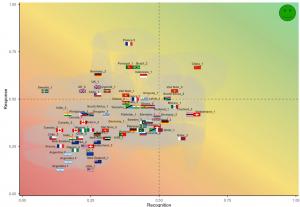
The publication, titled “Prepared for the Predictable? Overshoot and the Failure of Countries to Ready Themselves,” issued in conjunction with Earth Overshoot Day, examined key national strategy documents from numerous large economies, encompassing five-year plans, budget speeches, and national security strategies.
Using AI-assisted techniques, the researchers assessed how thoroughly each document acknowledges ecological overshoot as an economic danger and whether that awareness translates into concrete policies and investments. The evaluation employed a five-category rubric, applied separately by four large language models, yielding consistent outcomes.
Principal findings:
• None of the national strategies examined meaningfully addresses overshoot risks.
• China’s current five-year plan achieved the highest score, yet it still does not provide a proportionate response.
• Argentina’s national strategy documents ranked the lowest among all reviewed.
• The European Union scored lower than its sustainability reporting track record might imply, pointing to a disconnect between public pledges and economic planning.
These results suggest that even when sustainability is recognized in public conversation, it is not reliably mirrored in the structural decisions that shape national economies.
“Ecological overshoot is not a distant environmental concern; it’s a live economic risk,” said Dr. David Lin, co-author of the report. “Countries are so dependent on global resources that they are becoming increasingly vulnerable to resource shocks, as seen in supply disruptions triggered by events such as Russia’s invasion of Ukraine, the closure of the Strait of Hormuz, and the COVID-19 pandemic.”
The report advises governments to create cross-party task forces to detect and close gaps in their economic strategies. It also points to emerging tools, like the Transition Valuation Project, which uses an overshoot perspective in infrastructure, corporate, and investment choices.
The complete analysis, including country-by-country scores and methodology, is openly accessible at https://footprintnetwork.org/prepared-for-the-predictable
ABOUT EARTH OVERSHOOT DAY:
Earth Overshoot Day marks the date when humanity’s demand for ecological resources and services in a given year exceeds what Earth can regenerate in that year. This ecological deficit spending is possible because economies can overuse resource stocks, leading to the liquidation of ecological resources stocks and the accumulation of waste, most prominently carbon dioxide in the atmosphere. In 2026 it falls on July 30.
Such overspending cannot last, because any overuse will end. The question is only how: by design or disaster.
ORGANIZATION BEHIND EARTH OVERSHOOT DAY AND THIS REPORT:
Earth Overshoot Day (https://www.overshootday.org) is hosted by Global Footprint Network, which also initiated this report. Global Footprint Network is an international research organization that helps countries, cites, and companies unlock meaningful responses to overshoot. The calculation of the date builds on the National Footprint and Biocapacity Accounts, which are governed by FoDaFo and maintained by York University. To determine the date of Earth Overshoot Day for each year, Global Footprint Network calculates the number of days of that year that Earth’s biocapacity suffices to provide for humanity’s Ecological Footprint. The remainder of the year corresponds to global overshoot.
Global Footprint Network partnered with Greenings , an organization that fosters champions who leverage the sustainability transition in ways that create value today. Visit them at https://www.greenings.org
ADDITIONAL MATERIALS:
♥ Report and supporting materials: https://footprintnetwork.org/prepared-for-the-predictable/
♥ Introduction to analysis for the general public – https://footprintnetwork.org/2026/07/20/planet-sent-invoice/
♥ Access to a Gemini Notebook where you can query the LLM outputs for each country – https://notebooklm.google.com/notebook/3d0b056f-e1dc-4c84-99f6-f3922adeda6e?authuser=3
♥ Data platform with country Footprint comparisons: https://data.footprintnetwork.org
♥ Visuals to download – https://overshoot.footprintnetwork.org/newsroom/visuals/
AUTHOR CONTACTS:
MATHIS WACKERNAGEL
Global Footprint Network
+1 510-459-5820
media@footprintnetwork.org
Visit us on social media:
LinkedIn
Instagram
Facebook
YouTube