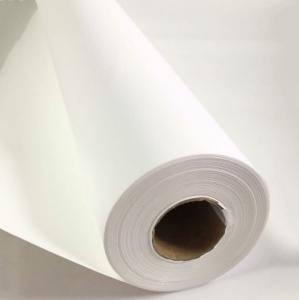
JIAXING, ZHEJIANG, CHINA, October 25, 2026 /EINPresswire.com/ — The daily grind of commercial display work—retail windows, roll-up stands, exhibition banners—puts graphic materials under constant stress. Sign shops and print providers have traditionally leaned on paper or basic PVC films for short-term jobs, but those older substrates often bring headaches: ink that bleeds under heavy saturation, edges that curl when humidity shifts, and recycling hurdles that are tough to ignore.
As the industry pushes for cleaner output and faster turnaround, the choice of substrate is becoming a bigger factor in production efficiency and final job cost. Comparing how synthetic polypropylene film structures perform against those legacy paper and vinyl formats shows why some production teams are shifting their approach. When working with a professional printable PP sticker roll exporter in China, sign makers can access engineered synthetic media built specifically to address mechanical distortion and ink-matching constraints across a range of printing hardware. Understanding the core physical differences between traditional media and modern synthetic roll media clarifies how material selection impacts production throughput, display longevity, and total job cost.
Defining Modern Polypropylene Roll Media Mechanics
Traditional pressure-sensitive display media generally falls into two material categories: cellulose paper with solvent-based adhesive backings or soft PVC film. Standard adhesive paper absorbs moisture from ambient air, causing fibers to swell and wrinkle during heavy liquid ink deposition. Standard PVC films offer flexibility but raise environmental disposal concerns and often stretch during automated installation or high-tension mounting.
In contrast, modern printable PP sticker roll media utilizes an engineered polypropylene synthetic paper base. Polypropylene synthetic paper combines the smooth, high-resolution printing surface of premium coated paper with the tear resistance and water resistance of synthetic polymers. Synthetic PP media incorporates a micro-porous top coating formulated to accept ink droplets without feathering, backed by a stable pressure-sensitive adhesive layer and a release liner.
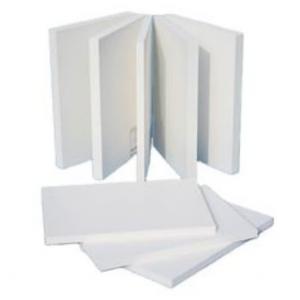
Signwell Eco PP Sticker media from MOYU (Zhejiang Shawei Digital Technology Co.,Ltd) represents this synthetic approach, featuring specialized formulations for indoor posters, roll-up displays, X-banner stands, and billboard signage. By replacing cellulosic fibers with a biaxially oriented synthetic film structure, the material resists moisture absorption, maintaining structural flatness across varying climate conditions.
Ink Chemistry Compatibility and Production Versatility
A persistent operational hurdle with traditional self-adhesive media involves restricted ink compatibility. Standard paper stickers often accommodate basic aqueous dye inks but degrade or saturate when exposed to high-volume pigment systems or aggressive Eco-solvent fluids. Conversely, traditional untreated PVC films require solvent or UV-curable chemistries to etch into the plastic surface, rendering them incompatible with standard office or indoor aqueous printers.
This media division forces print shops to carry separate inventories for different machine types. MOYU addresses ink flexibility by engineering multi-compatible coating chemistries across its Signwell Eco series.
The synthetic surface layer on MOYU PP sticker rolls supports three main ink chemistries:
- Aqueous Dye Inks: Achieving high optical density and vibrant color representation for short-term indoor promotional graphics.
- Pigment Inks: Providing enhanced lightfastness and archival stability for retail displays and indoor exhibitions exposed to direct lighting.
- Eco-Solvent Inks: Delivering durable ink anchorage for high-volume commercial print jobs.
Eliminating the need to switch roll stock when changing print jobs or printer types reduces media waste and machine setup downtime. Print providers can process aqueous poster orders and eco-solvent retail graphics using unified media specifications, streamlining workflow across different print devices.
Dimensional Stability and Weathering Performance
Physical stability during display installation and throughout the campaign lifespan separates synthetic substrates from traditional paper alternatives. Standard paper stickers absorb moisture in high-humidity environments, leading to surface bubbling, adhesive lifting, and visible edge curling.
Polypropylene synthetic media resists fluid penetration and mechanical distortion. MOYU produces synthetic printable PP sticker roll stock across structured thickness profiles, including 60/75 micron film layers for light-duty applications and 110/130 micron heavy-duty bases.
The higher micron ratings provide structural rigidity without adding excess bulk, allowing displays to remain flat inside tension frames and banner stands. Because polypropylene does not absorb water, graphics printed on synthetic stock maintain dimensional integrity in humid indoor spaces and short-term outdoor installations. Water-resistant surface properties prevent ink run-off from light splatter or atmospheric condensation, protecting graphic sharpness throughout exhibition cycles.
Export Manufacturing Capabilities and Custom Roll Configurations
Sourcing display media from traditional trading intermediaries often presents challenges regarding rigid roll sizes, restricted coating variations, and inconsistent batch quality. Overseas buyers routinely encounter fixed roll lengths that create waste during automated converting or custom sign assembly.
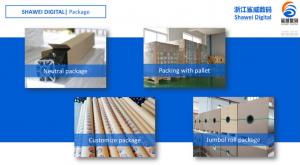
Working directly with an established printable PP sticker roll exporter like Zhejiang Shawei Digital Technology Co.,Ltd provides custom material configurations adapted to regional finishing machinery. Founded in 1998, Zhejiang Shawei Digital Technology Co.,Ltd operates dust-free production facilities and maintains an internal quality control system that monitors raw materials through final slitting and packaging.
Manufacturing flexibility extends across multiple roll formats and finishes:
- Surface Finishes: Matte coatings for glare-free display under high artificial light, and glossy coatings for high-contrast, vivid photographic posters.
- Format Sizes: Standard sheet formats including A3 and A4 for localized desktop printing, standard roll widths for commercial wide-format equipment, and jumbo rolls for high-speed industrial converting.
- Environmental Options: PVC Free advertising media options that support corporate environmental initiatives without sacrificing print performance.
Zhejiang Shawei Digital Technology Co.,Ltd manages export logistics through 11 regional branches, supplying custom media solutions to buyers across North America, South America, Europe, and Southeast Asia. Direct factory R&D testing ensures that adhesive strength, release force, and coating consistency remain uniform across large production runs.
Choosing Synthetic Media for Commercial Display Applications
Evaluating media performance requires looking beyond the initial roll price to consider finished print quality, mounting ease, and display durability. While traditional paper media may present lower upfront material costs, risks related to moisture damage, ink bleeding, and edge curl often increase total job costs due to reprints or display failures.
Synthetic polypropylene sticker rolls provide a balanced alternative, offering the smooth finish of paper alongside the moisture resistance and mechanical toughness of synthetic films. Partnering with a specialized supplier like MOYU ensures access to stable ink-receptive coatings, consistent roll dimensions, and reliable global delivery schedules.
For sign manufacturers, print shops, and media distributors seeking to improve print efficiency and display performance, transitioning to engineered PP synthetic sticker rolls provides a proven path forward.
Explore technical media specifications and product details directly on the company website: https://www.shaweidigital.com/
Why it matters: The shift from paper and PVC to synthetic polypropylene media reflects a broader industry demand for materials that hold up under real-world conditions without forcing print shops to stock multiple substrate types. For small and mid-sized sign makers, this could mean fewer reprints, less waste, and a simpler path to consistent output quality across different jobs and printers.
MOYU
MOYU