In its Capital + Culture Series, Living Cities Investigates Whether One of the FIFA World Cup’s Most Notable Successes Can Serve as a Durable Blueprint for Local Wealth Creation
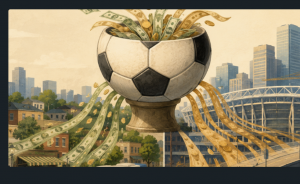
Kansas City became a global destination during the FIFA World Cup.
The city’s FIFA Fan Festival drew more than 310,000 attendees from over 150 nations. Stadiums were packed. Hotels operated at full capacity. Restaurants, local shops, and entertainment zones served an international crowd. Local TV ratings topped every U.S. World Cup market, signaling a community that embraced the event with clear pride.
For a few weeks, Kansas City exceeded its role as one of the tournament’s smallest host cities.
It emerged as one of the event’s standout narratives.
But as global focus shifts elsewhere, a different question lingers. What comes after the final whistle?
For Living Cities, this inquiry goes beyond tourism numbers, attendance figures, or visitor expenditures. The more critical metric is whether the extraordinary exposure generated by the World Cup yields lasting benefits for the people, enterprises, and neighborhoods that define Kansas City on a daily basis.
Because visibility by itself does not generate prosperity. Economic activity does not automatically result in ownership. And international recognition does not guarantee local wealth.
Through its Capital + Culture national thought leadership series, Living Cities examines how major sports and cultural events can drive long-term economic mobility rather than just temporary economic surges. Kansas City now presents one of the nation’s most compelling cases for studying what unfolds when global attention aligns with local initiative.
“The issue is no longer whether the World Cup drew people to Kansas City,” remarked Joe Scantlebury, President and CEO of Living Cities. “The issue is whether local entrepreneurs, neighborhood businesses, employees, and residents can leverage that momentum well after the visitors have departed.”
Kansas City has already proven that culture can bring communities together.
The city’s world-renowned hospitality, deep sports culture, lively neighborhoods, flourishing small businesses, and welcoming civic character elevated the tournament beyond a mere series of games. In restaurants, local pubs, entertainment districts, fan festivals, and public gathering spots, both residents and visitors crafted an atmosphere that became integral to the global World Cup experience itself.
That cultural achievement now creates an economic opening.
The city has made deliberate investments to expand opportunities for local entrepreneurs through supplier platforms, small-business programs, and community partnerships linked to the tournament. These initiatives acknowledge that a lasting legacy depends not only on what happens inside stadiums but also on who participates in the broader economy surrounding them.
For Living Cities, the next chapter of Kansas City’s story is not quantified by attendance. It is measured by results.
Which local businesses gained new clientele? Which entrepreneurs secured contracts that extend beyond the tournament? Which neighborhood enterprises grew due to increased visibility? Which workers developed new career paths? Which communities drew fresh investment? Which relationships formed during the World Cup evolve into future economic collaborations? And ultimately: Who moved from being seen to owning?
“Kansas City has a chance to show what happens when culture becomes a driver of economic mobility,” said Scantlebury. “A successful legacy is gauged not just by visitor spending, but by whether more entrepreneurs become investable, more businesses become scalable, more neighborhoods capture value, and more residents build lasting wealth.”
Kansas City’s World Cup narrative also mirrors a broader trend across America.
Increasingly, cities are realizing that their greatest competitive edge is not simply infrastructure or tax incentives. It is identity.
Culture has become economic infrastructure.
The places that effectively convert local authenticity into sustained investment, entrepreneurship, innovation, and ownership will be better positioned to compete for talent, capital, and opportunity long after major events conclude.
That is the question Capital + Culture aims to explore, not just in Kansas City, but in host cities nationwide that are preparing for future global moments.
The matches eventually end. Visitors go home. Headlines fade.
The true legacy begins afterward.
ABOUT LIVING CITIES
For 35 years, Living Cities has operated at the intersection of capital, policy, and systems change to help close income and wealth gaps in communities across the United States.
As an Action Engine for Equitable Cities, Living Cities convenes leading philanthropic foundations, financial institutions, and public-sector partners to remove obstacles to capital investment, accelerate inclusive economic growth, and strengthen pathways to wealth creation.
Through collaborative action, research, and national partnerships, Living Cities helps cities build economies that create opportunity for more people, not only during periods of growth but long after the spotlight has moved on. Readers interested in how cities can turn moments of global attention into long-term economic mobility are encouraged to explore the Living Cities Center for Wealth Equity’s groundbreaking white paper, Event-Driven Capital Absorption, which introduces a practical framework for converting major events into lasting local investment, entrepreneurship, and wealth creation.
Learn more at https://bit.ly/LivingCitiesCapitalAbsorption
Macon
strut AGENCY
+1 818-749-8786
email us here