The Business Research Company

The Business Research Company’s Artificial Intelligence (AI) Market in Aging and Elderly Care Global Market Report 2026 – Market Size, Trends, And Forecast
Artificial intelligence is reshaping the way care and support services reach older adults, and the numbers behind that shift are drawing attention. With populations aging worldwide, AI tools are moving from novelty to necessity in addressing the distinct challenges elderly individuals face. Below is a look at the market’s current size, the forces driving its growth, the regions in play, and the trends taking shape across the sector.
Market Size and Growth Potential in the AI in Aging and Elderly Care Market
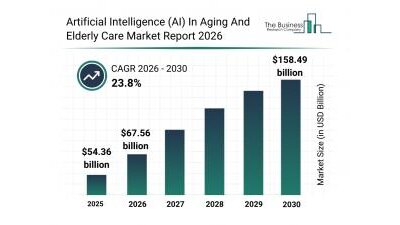
Recent years have brought striking expansion to the AI in aging and elderly care market. The segment is expected to climb from $54.36 billion in 2025 to $67.56 billion in 2026, a compound annual growth rate (CAGR) of 24.3%. Several forces explain this past growth: the aging population across the globe, a rise in chronic diseases, the spread of remote healthcare services, broader acceptance of digital health technologies, and growing demand for assisted living solutions.
Download a free sample of the artificial intelligence (ai) in aging and elderly care market report:
https://thebusinessresearchcompany.com/sample_request?id=92691760&type=smp&name=Artificial%20Intelligence%20%28AI%29%20In%20Aging%20And%20Elderly%20Care%20Market%20Report%202026&utm_source=EINPresswire&utm_medium=Paid&utm_campaign=Oct_PR
Looking ahead, the pace is expected to quicken further, with the market projected to hit $158.49 billion by 2030 at a CAGR of 23.8%. What fuels that forecast? Rising investments in AI-enabled healthcare platforms, growing demand for personalized care for the elderly, wider adoption of smart home healthcare technologies, an emphasis on preventive care, and the integration of robotics into eldercare services. Among the notable trends: expanding use of AI-powered health monitoring, wearable devices tailored for seniors, predictive analytics for managing health risks, robotic assistance innovations, and more remote care delivery models.
Understanding AI’s Role in Enhancing Elderly Care
At its core, artificial intelligence in aging and elderly care means applying AI-powered technologies to improve health outcomes and quality of life for older adults. The toolkit spans machine learning, predictive analytics, robotics, and smart devices, all aimed at tackling age-related health challenges. Through wearable gadgets and remote patient management systems, AI enables continuous health monitoring, analyzing real-time data to support timely interventions and personalized care.
View the full artificial intelligence (ai) in aging and elderly care market report:
https://thebusinessresearchcompany.com/report/artificial-intelligence-ai-in-aging-and-elderly-care-global-market-report?utm_source=EINPresswire&utm_medium=Paid&utm_campaign=Oct_PR
Population Growth as a Key Driver in AI for Aging and Elderly Care
What is propelling this market above all else? The significant increase in the elderly population. Usually defined as individuals aged 60 or 65 and above, this group requires specialized care due to age-associated health and lifestyle issues. Longer life expectancies stemming from medical advancements, combined with lower birth rates that reduce the younger population’s proportion, are behind this growth. AI technologies are revolutionizing elderly care by enhancing healthcare delivery, improving access, and supporting greater independence for seniors. For instance, a January 2024 report by the Population Reference Bureau, a US nonprofit, highlights that Americans aged 65 and older are expected to grow from 58 million in 2022 to 82 million by 2050—a 47% rise. Their share of the overall US population will also increase from 17% to 23%. This demographic shift is a significant catalyst for the expanding AI market in this sector.
Additional Factors Encouraging Growth in AI for Aging Care
Beyond demographic changes, other forces are at work. The rising prevalence of chronic diseases among older adults intensifies the need for efficient management solutions, which AI can provide. Growing adoption of telehealth and remote monitoring technologies also broadens AI’s reach in eldercare. On top of that, increased awareness of digital health tools and the desire for assisted living options contribute to the market’s expansion, making AI an indispensable element of future elderly care strategies.
Regional Overview and Market Expansion in AI for Aging and Elderly Care
In 2025, North America stood as the largest market for AI in aging and elderly care, benefiting from advanced healthcare infrastructure, high technology adoption, and significant investments. Meanwhile, Asia-Pacific is predicted to experience the fastest growth over the coming years, driven by its rapidly aging population and increasing healthcare modernization. The market report includes insights on key regions such as Asia-Pacific, South East Asia, Western Europe, Eastern Europe, North America, South America, the Middle East, and Africa, providing a global perspective on the industry’s development.
New additions to our 2026 reports:
• Market attractiveness scoring and analysis
• Total addressable market (TAM) analysis
• Company scoring matrix graphics and tables
• Excel-based forecasting dashboards
• Market hotspots infographics
• Key technologies and future trend analysis
• Updated graphics and tables
Speak With Our Expert:
Saumya Sahay
Americas +1 310-496-7795
Asia +44 7882 955267 & +91 8897263534
Europe +44 7882 955267
Email: marketing@tbrc.info
The Business Research Company – www.thebusinessresearchcompany.com
Follow Us On:
• LinkedIn: https://in.linkedin.com/company/the-business-research-company"
Oliver Guirdham
The Business Research Company
+44 7882 955267
info@tbrc.info
Visit us on social media:
LinkedIn
Facebook
X
Why it matters: The projected leap from $54.36 billion in 2025 to $158.49 billion by 2030 signals that AI is becoming core infrastructure for eldercare, not a side experiment. With the US alone expected to see its 65-and-older population rise 47% between 2022 and 2050, according to the Population Reference Bureau, the pressure to scale monitoring, robotics, and remote care tools will only intensify. How fast regions—particularly Asia-Pacific, the forecast’s fastest-growing market—build out these systems will shape the quality and accessibility of care for a generation.