When cancer treatment moves from hospital wards to living rooms, it’s more than a convenience—it’s a market transformation. The Business Research Company’s latest data reveals that the chemotherapy at home services sector is on track to nearly double in value over the next decade, driven by patient demand and technological change.
The Business Research Company’s Chemotherapy At Home Services Market Report 2026 – Market Size, Trends, And Global Forecast 2026-2035
Patients and providers alike are increasingly embracing the idea of receiving cancer treatment outside traditional clinical settings, according to the chemotherapy at home services market report. This shift toward home-based care is reshaping how chemotherapy is delivered, offering both convenience and comfort without sacrificing effectiveness.
Also worth a look: ARIID Group brings its one-team design-build-furnish model to Summerlin’s unique desert homes and Freedom Behavioral Health opens Anchorage clinic, built by an Alaskan who knows the care gaps firsthand.
Market Size and Growth Outlook for Chemotherapy At Home Services
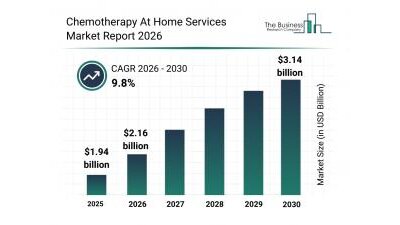
The numbers tell a compelling story. The market was valued at $1.94 billion in 2025 and is projected to hit $2.16 billion in 2026, representing a compound annual growth rate (CAGR) of 11.1%. That initial surge stems from expanding outpatient cancer treatment programs, a stronger focus on patient-centered care, the availability of portable infusion pumps, cost-reduction pressures, and improved oncology drug formulations. Looking further ahead, the market is forecast to reach $3.14 billion by 2030, growing at a CAGR of 9.8%. Key drivers for this future growth include rising investments in home healthcare, the adoption of digital oncology monitoring tools, expansion of targeted therapies, a shift toward decentralized care delivery, and better reimbursement options for home chemotherapy services. Emerging trends include more home-based oncology care models, portable infusion technologies, remote patient monitoring integration, personalized chemotherapy regimens, and a heightened emphasis on patient comfort and safety.
Download a free sample of the chemotherapy at home services market report:
https://thebusinessresearchcompany.com/sample_request?id=87680806&type=smp&name=Chemotherapy%20At%20Home%20Services%20Market%20Report%202026&utm_source=EINPresswire&utm_medium=Paid&utm_campaign=Nov_PR
Understanding Chemotherapy At Home Services
These services give cancer patients the option to receive treatment outside hospitals or specialized centers, typically administered by a team including doctors and nurses. This outpatient care model allows patients to undergo chemotherapy in the comfort and familiarity of their own homes, which can significantly improve their overall experience and quality of life.
The Growing Impact of Cancer Prevalence on Market Demand
A primary force behind the market’s expansion is the rising global cancer burden. Cancer involves the uncontrolled growth and spread of abnormal cells, and its prevalence is increasing due to aging populations, lifestyle changes, environmental exposures, genetic predispositions, and improved detection methods. Home-based chemotherapy offers patients greater convenience and a better quality of life compared to conventional clinical settings. For example, in January 2023, the National Center for Biotechnology Information reported that the United States had 1,958,310 new cancer cases and projected 609,820 cancer-related deaths for the year—figures that underscore the large patient population driving demand for home-based solutions.
View the full chemotherapy at home services market report:
https://thebusinessresearchcompany.com/report/chemotherapy-at-home-services-global-market-report?utm_source=EINPresswire&utm_medium=Paid&utm_campaign=Nov_PR
Rising Healthcare Spending as a Catalyst for Market Growth
Increasing healthcare expenditure is another crucial factor supporting this market. Healthcare spending encompasses all resources allocated by individuals, organizations, and governments toward disease prevention, treatment, and management. Advances in medical technology, including new diagnostics and therapies, often drive up overall costs. This rising expenditure enables greater investment in cost-effective, patient-focused cancer care models, facilitates expanded reimbursement policies, and enhances the infrastructure needed to safely provide chemotherapy at home. For instance, data from the Centers for Medicare & Medicaid Services showed that in 2023, U.S. healthcare spending rose by 7.5% to $4.9 trillion, averaging about $14,570 per person. This upward trend is therefore a key driver behind the chemotherapy at home services market growth.
Regional Distribution and Market Trends
In 2025, North America held the largest share of the global chemotherapy at home services market. However, the Asia-Pacific region is expected to experience the fastest growth during the forecast period. The comprehensive market report covers several regions, including Asia-Pacific, South East Asia, Western Europe, Eastern Europe, North America, South America, the Middle East, and Africa, providing a global perspective on market developments and opportunities.
The 2026 edition of our market reports now delivers enhanced analytical coverage through market attractiveness scoring and analysis, total addressable market (TAM) analysis, company scoring matrix graphics and tables, Excel-based forecasting dashboards, market hotspots infographics, key technologies and future trend analysis, plus updated graphics and tables.
Speak With Our Expert:
Saumya Sahay
Americas +1 310-496-7795
Asia +44 7882 955267 & +91 8897263534
Europe +44 7882 955267
Email: marketing@tbrc.info
The Business Research Company – www.thebusinessresearchcompany.com
Follow Us On:
• LinkedIn: https://in.linkedin.com/company/the-business-research-company
Oliver Guirdham
The Business Research Company
+44 7882 955267
info@tbrc.info
Visit us on social media:
LinkedIn
Facebook
X
Why it matters: As cancer prevalence continues to climb and healthcare spending rises, home-based chemotherapy offers a model that balances cost efficiency with patient quality of life. This shift could redefine how millions of patients experience treatment, while opening new opportunities for investors and healthcare providers alike.