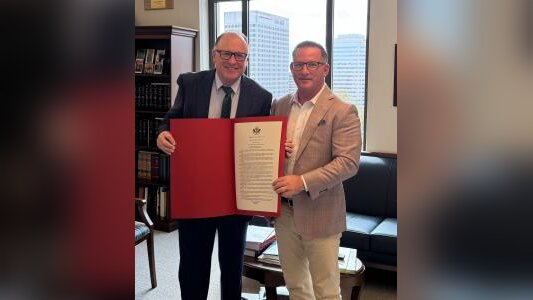
The Virginia General Assembly didn’t just hand out a routine commendation last week — it formally recognized a leader who helped reshape how the state handles mental health and developmental disability services. On November 4, 2026, Senator Creigh Deeds presented Senate Joint Resolution No. 157 to Nelson Smith, FACHE, the current CEO of Virginia-based behavioral health provider Sobrius, in a private ceremony that underscored years of work overhauling a system under strain.
The resolution, which the Senate approved on March 5, 2026, and the House of Delegates passed on March 9, 2026, commends Smith for his tenure as Commissioner of the Virginia Department of Behavioral Health and Developmental Services (DBHDS), a post to which the governor appointed him in 2022. It specifically cites his guidance “during a period of significant transformation in Virginia’s behavioral health system.”
“Nelson Smith is a leader who as Commissioner worked to improve mental health services both in the hospitals and the communities. He made a difference,” said Senator Creigh Deeds. Deeds represents Virginia’s 11th Senate District, which encompasses Albemarle, Amherst and Nelson counties, the City of Charlottesville and part of Louisa County. Having served in the Senate since 2001 — following a stint in the House of Delegates from 1992 to 2001 — he chairs the Senate Commerce and Labor Committee and sits on the Behavioral Health Commission, with which the resolution notes Smith worked closely. Deeds has earned recognition for his mental health advocacy from groups including the National Alliance on Mental Illness (NAMI) and the Psychiatric Society of Virginia.
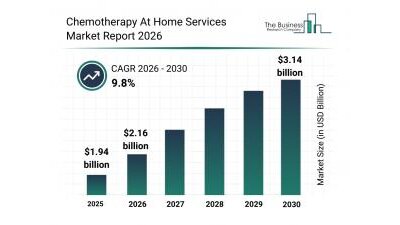
Also worth a look: Chemotherapy at home market to hit $3.14B by 2030 as cancer care shifts to living rooms and ARIID Group brings its one-team design-build-furnish model to Summerlin’s unique desert homes.
The resolution details several specific areas where Smith’s leadership strengthened care for Virginians:
- Crisis response: Helping establish the 988 Suicide and Crisis Lifeline and expanding mobile crisis services and crisis centers, so Virginians in crisis receive help when and where it is needed and avoid hospitalization whenever possible.
- Developmental disability services: Concluding the federal settlement agreement with the U.S. Department of Justice and transitioning to a permanent injunction, reflecting sustained progress in helping individuals with developmental disabilities live in the most integrated settings appropriate to their needs.
- A unified system of care: Leading efforts to bring the Commonwealth’s hospitals and centers into a more coordinated and accountable system, with shared standards, workforce stability, and patient safety, during unprecedented workforce and operational challenges.
- Data and transparency: Championing performance measurement, modernized data systems, and public dashboards that improved transparency for policymakers, providers, and the public.
- Partnership with the legislature: Working closely with members of the General Assembly and the Behavioral Health Commission to provide transparent information, data-driven analysis and thoughtful policy guidance.
The resolution concludes that “the Commonwealth owes Nelson Smith a deep debt of gratitude for his integrity, perseverance, and unwavering dedication to public service, and for his lasting contributions to strengthening Virginia’s behavioral health system during a period of historic change.”
The document also notes that Smith “emphasized respect, dignity, and compassion as foundational values,” grounding his leadership in a belief that recovery, stability and a life of possibility are achievable when services are designed with intention, accountability and humanity. “It is a privilege to be recognized by the General Assembly, but this honor belongs to the people who did the work every day: the crisis responders, hospital staff, community services board teams and providers across Virginia who showed up for people in their hardest moments,” said Smith. “The resolution speaks of hope, and that belief guides everything we do at Sobrius. Recovery is possible when care is delivered with dignity, accountability and compassion.”
Smith joined Sobrius as CEO in January 2026 after serving as one of the principal architects of Right Help, Right Now, Virginia’s three-year, $1.4 billion plan to modernize crisis response, expand treatment capacity and strengthen the behavioral health workforce. Under that initiative, mobile crisis teams grew from 36 to more than 110 statewide, and licensing timelines fell from roughly two years to approximately 90 days.
At Sobrius, Smith is applying the same priorities of accountability, data-driven performance and whole-person care to residential and outpatient substance use disorder treatment, including the company’s recent partnership with Adentris to bring real-time clinical quality and compliance visibility into daily operations.
A decorated U.S. Army Special Forces veteran, Smith spent 15 years in the Army’s 5th Special Forces Group (Airborne), where he earned the Green Beret, the Purple Heart and four Bronze Star Medals, including one with a “V” device for valor. He holds an MBA from the Kellogg School of Management at Northwestern University.
Why it matters: Smith’s recognition by the General Assembly signals that Virginia’s years-long investment in behavioral health reform — backed by $1.4 billion and measurable outcomes like expanded crisis teams and shorter licensing timelines — is being treated as a lasting policy priority, not a temporary fix. For other states grappling with mental health and substance use crises, the Virginia model offers a blueprint built on data, legislative partnership, and a focus on community-based care over institutionalization.