Automation is no longer a futuristic concept—it is the engine driving modern manufacturing, and the numbers confirm it. A new forecast from The Business Research Company projects the industrial robotics sector will blow past $99 billion by 2030, with Asia-Pacific and China emerging as the undisputed powerhouses in this rapidly expanding field.
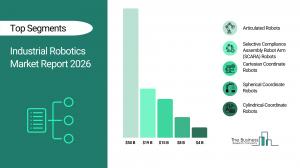
Industrial Robotics Market Report
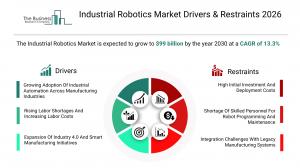
The Business Research Company’s Industrial Robotics Global Market Report 2026 – Market Size, Trends, And Forecast 2026-2035
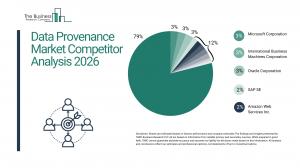
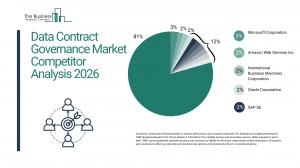
Also worth a look: Data provenance market to hit $6B by 2030 as governance demands surge and Cybersecurity in robotics market on track to hit $9B by 2030, TBRC report finds.
LONDON, GREATER LONDON, UNITED KINGDOM, October 26, 2026 /EINPresswire.com/ — The industrial robotics sector is undergoing a seismic shift as automation becomes a cornerstone of contemporary production. Operating within the broader Information Technology space, this market is positioned for explosive growth through 2030, fueled by technological breakthroughs and surging demand across multiple sectors. Here is a closer look at the current state of play, which regions are dominating, the key product categories, the forces driving expansion, and the companies shaping the industry’s trajectory.
Market Size Projections and Regional Supremacy in Industrial Robotics by 2030
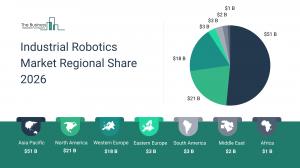
The industrial robotics market is on track to surpass $99 billion by 2030. This figure represents roughly 0.7% of the wider Information Technology industry, which is projected to hit $13,788 billion that same year. Asia-Pacific emerges as the dominant region, with an anticipated market value of $51 billion in 2030. That represents a substantial jump from $27 billion in 2025, reflecting a compound annual growth rate (CAGR) of 13%. The region’s impressive momentum stems from widespread automation in manufacturing, robust adoption of robotics in sectors like automotive and electronics, climbing labor costs, investments in smart factory infrastructure, progress in collaborative and intelligent robot development, and strong governmental support across nations such as China, Japan, South Korea, and Southeast Asia.
Request A Free Sample Of The Industrial Robotics Market Report
https://thebusinessresearchcompany.com/sample_request?id=60957190&type=smp&name=Industrial%20Robotics%20Market%20Report%202026&utm_source=EINPresswire&utm_medium=Paid&utm_campaign=Oct_PR
China’s Position as the Top Country in Industrial Robotics by 2030
China is poised to become the largest country-level market for industrial robotics by 2030, with a projected valuation of $25 billion. Starting from $14 billion in 2025, the country is expected to sustain a CAGR of 13%. This surge reflects China’s extensive integration of robotics into its manufacturing hubs, heightened demand for precision and production speed, growth in electric vehicle and battery manufacturing, expanded robotics use in logistics and warehousing, strengthening domestic robotics production capabilities, and sustained investment in advanced automation designed to enhance industrial output nationwide.
Articulated Robots Set to Dominate the Industrial Robotics Market Segments
Looking at the market by type, industrial robotics is categorized into articulated robots, cartesian coordinate robots, cylindrical-coordinate robots, spherical coordinate robots, selective compliance assembly robot arm (SCARA) robots, and others. Articulated robots are projected to lead the pack, capturing 50% of the market—roughly $50 billion—by 2030. This category’s strength is driven by growing demand for multi-axis systems capable of handling complex manufacturing tasks, increased adoption in welding, assembly, and material handling, the need for flexible automation with enhanced mobility, ongoing improvements in payload capacity and precision, integration of advanced sensors and motion control, and broader deployment across diverse industrial applications.
Access The Detailed Industrial Robotics Market Report Here
https://thebusinessresearchcompany.com/report/industrial-robotics-global-market-report?utm_source=EINPresswire&utm_medium=Paid&utm_campaign=Oct_PR
Application and End-User Segmentation in the Industrial Robotics Market
The market is also broken down by application into welding and soldering, material handling, assembling and disassembling, dispensing, processing, and other operational functions. From an end-user standpoint, key industries include automotive, electrical and electronics, metals and machinery, plastics, rubbers, chemicals, food and beverages, precision engineering and optics, pharmaceuticals and cosmetics, and others—underscoring the broad applicability of industrial robotics across sectors.
Steady Growth Projected with a 13% CAGR Through 2030
The industrial robotics market is expected to maintain a robust compound annual growth rate of 13% heading into 2030. This consistent pace signals sustained demand and continuous innovation as industries increasingly turn to robotic solutions to boost productivity and operational efficiency.
Industrial Automation Adoption Fuels Market Expansion
A primary catalyst for this market’s growth is the accelerating uptake of industrial automation across manufacturing sectors. Companies are keen to enhance productivity, reduce costs, and streamline operations. Robots are particularly effective at handling repetitive and labor-intensive tasks with greater speed and consistency than human workers, enabling manufacturers to ramp up output while cutting down on errors. As sectors such as automotive, electronics, food and beverage, and pharmaceuticals continue their automation journeys, demand for robotic systems, integration services, software, and maintenance is climbing, directly fueling market growth. This trend is anticipated to contribute roughly 2.0% in annual growth.
Labor Shortages and Rising Costs Drive Robotic Adoption
Another key growth factor is the growing scarcity of skilled labor, compounded by rising wages and employee-related expenses. Many regions are struggling to fill critical manufacturing positions, and higher labor costs are pushing companies to seek cost-effective alternatives. Industrial robots provide a dependable solution, operating continuously with minimal downtime and lower long-term expenses. This dynamic is encouraging businesses to invest more heavily in robotic technologies, adding approximately 1.5% annually to market expansion.
Industry 4.0 and Smart Manufacturing Initiatives Accelerate Robotics Demand
The emergence of Industry 4.0 and smart factory concepts is another vital growth driver for industrial robotics. Advanced technologies such as artificial intelligence, the industrial Internet of Things (IIoT), cloud computing, and data analytics are being woven into manufacturing environments to create interconnected, intelligent production systems. Robots are central to these setups, enabling automated, data-driven, and highly flexible processes. Their ability to communicate with other machinery enhances visibility, resource utilization, and efficiency. As digital transformation efforts intensify, demand for sophisticated robotic solutions is expected to rise, contributing roughly 0.8% in annual growth to the market.
Opportunities Across Diverse Robot Types Reflect Rising Industry Needs
Significant growth opportunities exist within articulated robots, cartesian coordinate robots, cylindrical-coordinate robots, spherical coordinate robots, SCARA robots, and other categories. Together, these segments are projected to generate over $46 billion by 2030. Key growth drivers include rising demand for precision automation, expanded use in assembly and quality control, advances in robotic controls and vision systems, tailored automation solutions, growth of smart factories, and development of energy-efficient intelligent robots. These trends underscore the push toward greater manufacturing accuracy, operational flexibility, and next-generation automation technologies.
Market Value Increases Across Robot Categories from 2025 to 2030
Over the next five years, the articulated robot segment is expected to expand by $22 billion, cartesian coordinate robots by $9 billion, cylindrical-coordinate robots by $2 billion, spherical coordinate robots by $3 billion, SCARA robots by $9 billion, and other types by $1 billion. This growth is supported by a mix of global robotics manufacturers and automation solution providers focused on developing advanced robotic arms, collaborative robots, AI-driven systems, machine vision, and precision motion controls to enhance production efficiency and maintain competitiveness.
Leading Companies Driving Innovation and Market Share in Industrial Robotics
FANUC Corporation stands out as the market leader with a 7% share in 2025. The company’s robotics and factory automation division offers a wide-ranging portfolio including robotic arms, CNC-integrated automation, collaborative robots, and intelligent manufacturing solutions for applications such as assembly, material handling, welding, and precision production in automotive, electronics, and industrial sectors. Other notable players include ABB Group, YASKAWA Electric Corporation, Kawasaki Heavy Industries Ltd., Seiko Epson Corporation, Denso Corporation, KUKA AG, Mitsubishi Electric Corporation, Universal Robots A/S, and Comau SpA, each contributing significant expertise and diverse product lines.
Market Concentration Reflects Moderate Fragmentation with Top Players Holding Significant Shares
The industrial robotics market is moderately fragmented, with the top 10 companies accounting for 26% of total revenue in 2025. High capital requirements, technical complexity, and integration challenges create moderate barriers to entry. Leading firms maintain their positions through extensive product portfolios, strong OEM partnerships, global distribution networks, and continuous innovation. With increasing adoption of Industry 4.0, collaborative robotics, AI-enabled automation, and IoT integration, these companies are well-positioned to capitalize on expanding demand and technological trends.
Key Raw Material Suppliers Supporting Industrial Robotics Technologies
Critical suppliers of raw materials and components include semiconductor and electronics firms such as NVIDIA Corporation, Intel Corporation, Advanced Micro Devices, Texas Instruments, STMicroelectronics, Infineon Technologies, NXP Semiconductors, Renesas Electronics, Broadcom Inc., Analog Devices, Microchip Technology, ON Semiconductor, Murata Manufacturing, Kyocera Corporation, Samsung Electronics, Sony Semiconductor Solutions, Toshiba Corporation, Mitsubishi Electric, ABB Ltd., Siemens AG, Bosch Rexroth, Rockwell Automation, Schneider Electric, Honeywell, and Emerson Electric. These companies provide the essential hardware enabling advanced robotics capabilities.
Major Wholesalers and Distributors Ensuring Market Reach
The industrial robotics market relies on prominent wholesalers and distributors such as Arrow Electronics Inc., Avnet Inc., Ingram Micro Inc., Tech Data Corporation, Synnex Corporation, Digi-Key Electronics, Mouser Electronics, RS Components, Future Electronics, TTI Inc., Allied Electronics and Automation, ScanSource, Westcon Group, Exclusive Networks, ALSO Holding, Esprinet, Redington Limited, Macnica Inc., EET Group, Bechtle AG, CDW Corporation, Insight Enterprises, D&H Distributing Company, Mindware, and Logicom Public Limited. Their extensive networks facilitate broad market penetration.
Key Industrial Robotics End Users Across Multiple Sectors
Leading end users include major corporations such as Toyota Motor Corporation, Tesla Inc., BMW Group, Volkswagen AG, Ford Motor Company, General Motors, Mercedes-Benz Group, Hyundai Motor Company, Nissan, Honda, Stellantis, BYD, Foxconn Technology Group, Apple Inc., LG Electronics, Sony Group, Flex Ltd., Jabil Inc., Caterpillar, Deere, Boeing, Airbus, Procter & Gamble, Unilever, and Nestlé. These companies rely heavily on robotics to optimize manufacturing efficiency and quality.
Competitive Trends Enhancing Automation and Manufacturing Quality
The market is witnessing innovative trends like plug-and-play collaborative surface finishing cells that automate sanding and polishing, reducing reliance on skilled labor while improving process consistency. For example, ABB Robotics introduced the OmniVance collaborative surface finishing cell in April 2026, featuring intuitive programming, 3D path recording, and rapid deployment. This technology streamlines operations, reduces scrap, and enhances surface quality, illustrating how automation advancements are transforming manufacturing.
Strategies Companies Use to Maintain Market Leadership
To stay competitive, companies are focusing on advancing collaborative robotics and flexible automation to boost productivity and quality. They are leveraging AI-powered robotic platforms for enhanced precision and safety, expanding smart factory infrastructures to improve scalability and resilience, and integrating machine vision and control systems for real-time process optimization. These strategic moves aim to meet evolving market demands and foster innovation in industrial automation.
The 2026 edition of the market reports now delivers enhanced analytical coverage through market attractiveness scoring and analysis, total addressable market (TAM) analysis, company scoring matrix graphics and tables, Excel-based forecasting dashboards, market hotspots infographics, key technologies and future trend analysis, plus updated graphics and tables.
Learn More About The Business Research Company
The Business Research Company (www.thebusinessresearchcompany.com) is a leading market intelligence firm renowned for its expertise in company, market, and consumer research. The firm has published over 30,000+ reports across 27 industries and 60+ geographies. Its research is powered by 1,500,000 datasets, extensive secondary research, and exclusive insights from interviews with industry leaders.
The company provides continuous and custom research services, offering a range of specialized packages tailored to client needs, including Market Entry Research Package, Competitor Tracking Package, Supplier & Distributor Package, and much more.
Disclaimer: Please note that the findings, conclusions, and recommendations that TBRC Business Research Pvt Ltd delivers are based on information gathered in good faith from both primary and secondary sources, whose accuracy the firm is not always in a position to guarantee. As such, TBRC Business Research Pvt Ltd can accept no liability whatever for actions taken based on any information that may subsequently prove to be incorrect. Analysis and findings included in TBRC reports and presentations are estimates, opinions, and are not intended as statements of fact or investment guidance.
Contact Us:
The Business Research Company
Americas +1 310-496-7795
Europe +44 7882 955267
Asia & Others +44 7882 955267 & +91 8897263534
Email: marketing@tbrc.info
Follow Us On:
LinkedIn: https://in.linkedin.com/company/the-business-research-company.
Oliver Guirdham
The Business Research Company
+44 7882 955267
info@tbrc.info
Visit us on social media:
LinkedIn
Facebook
X
Why it matters: The projected surge in industrial robotics—particularly the 13% CAGR and China’s rise to a $25 billion market—signals a fundamental shift in global manufacturing competitiveness. For businesses across automotive, electronics, and logistics, these figures underscore that automation is no longer optional but a strategic necessity for staying cost-effective and productive in the coming decade.