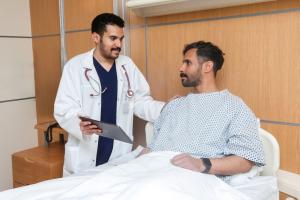
In a move that signals a fundamental shift in how specialized medicine reaches patients, King Faisal Specialist Hospital and Research Centre (KFSH) is dramatically scaling up its virtual and alternative care offerings at its Jeddah facility. The initiative is designed to give patients more control over how they access follow-up appointments and specialized treatments, all while cutting down on the number of trips they have to make to the hospital itself.
RIYADH, SAUDI ARABIA, October 25, 2026 /EINPresswire.com/ — The numbers tell a clear story about patient demand for flexibility. During 2025, KFSH Jeddah recorded 97,647 virtual clinic visits, which represents a 12.1 percent jump compared to the previous year. Interestingly, this digital expansion hasn’t come at the expense of in-person care. Outpatient visits to core specialized services actually climbed by 15.5 percent, reaching 132,368. This dual growth suggests that the hospital is successfully meeting diverse clinical needs, whether a patient requires a remote check-in or a hands-on examination.
This expansion is part of a broader, more streamlined approach to the entire patient journey. The hospital has reworked its processes from the initial referral all the way through to treatment and long-term follow-up. A notable achievement is the reduction of referral decision time to just 21 hours in 2025, meaning patients get clarity on their next steps much faster. To support this, KFSH has also upgraded its digital channels and Contact Center, making it easier for patients to find information, book appointments, and access both clinical and non-clinical support services.
Care is increasingly breaking out of the traditional hospital walls. Home healthcare visits at KFSH Jeddah totaled 14,924 in 2025, an increase of 11.8 percent, allowing patients to receive certain services in the comfort of their own homes when it is clinically safe to do so. In another practical innovation, the hospital has started offering therapeutic plasma exchange in its outpatient clinics. This means eligible patients can now receive this treatment without being admitted as inpatients, helping them get back to their daily routines faster.
Dr. Alfadel Alshaibani, a Lymphoma and Myeloma Consultant at KFSH, explained the thinking behind the changes. “These pathways provide patients with different points of access to specialized care rather than relying on a single hospital-based model,” he said. “Patient feedback and satisfaction data are used to identify areas for improvement and guide service development.” This reliance on patient data to shape services underscores a commitment to care that is not just high-tech, but also responsive to actual patient needs.
The entire strategy reflects KFSH’s broader, patient-centered vision, which leverages virtual care, home healthcare, outpatient treatments, and digital tools to bring specialized care closer to where people live, all while ensuring their treatment remains coordinated and continuous.
These developments come on the heels of significant international recognition. King Faisal Specialist Hospital and Research Centre was ranked first in the Middle East and Africa and 12th globally among the world’s top 250 academic medical centers for 2026. It was also named the most valuable healthcare brand in the Kingdom and the Middle East for 2026 by Brand Finance, and was listed by Newsweek among the World’s Best Hospitals, World’s Best Smart Hospitals, and World’s Best Specialized Hospitals for 2026.
Why it matters: KFSH’s data shows that a large-scale hospital system can successfully scale virtual and home-based care without sacrificing in-person services. For patients in Saudi Arabia and the broader region, this model points toward a future where access to world-class specialists is no longer limited by geography or the inconvenience of frequent hospital visits, potentially setting a new standard for how academic medical centers deliver follow-up care.
KFSH
Riyadh