As global energy markets shift their focus from sheer output to how cleanly and efficiently hydrocarbons are produced, resource-rich nations are being forced to rethink their competitive playbooks. A new report from Oxford Business Group (OBG) and Petroleum Development Oman (PDO) digs into exactly how the sultanate is navigating this terrain, arguing that the path forward lies as much in modernising existing operations as it does in chasing new energy sources.
OBG and PDO release a report examining how operational efficiency, digitalisation and emissions management are supporting long-term competitiveness
For hydrocarbon-dependent economies such as Oman, this means maximising the value of existing resources while also pursuing economic diversification and developing lower-carbon industries”— Aflah Al Hadhrami, Managing Director of PDO
MUSCAT, OMAN, October 18, 2026 /EINPresswire.com/ — The global energy transformation is fundamentally altering how hydrocarbons are extracted, monitored, and valued, with a growing premium placed on emissions intensity, operational governance, and efficiency—factors that now sit alongside traditional concerns like energy security. For Oman, this shift presents a dual opportunity: bolstering the competitiveness of its current production base while simultaneously advancing national sustainability targets and the broader goal of economic diversification.
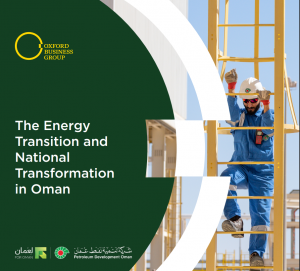
Titled ‘The Energy Transition and National Transformation in Oman,’ the publication—a collaborative effort between Oxford Business Group (OBG) and Petroleum Development Oman—investigates how the sultanate is syncing its energy sector with the ambitions of Oman Vision 2040 and its national net-zero pledges. The analysis covers how operational overhauls, digitalisation, emissions control, and institutional collaboration are driving lower-carbon hydrocarbon production, the expansion of renewable energy, and wider economic progress.
The report takes a hard look at how shifting global market expectations are redrawing the competitive landscape for oil and gas producers. While hydrocarbons remain a cornerstone of Oman’s fiscal stability, energy security, and industrial growth, the study notes that environmental performance is now a critical factor in securing market access, attracting financing, and influencing capital deployment. Consequently, strategies to lower emissions intensity, curb flaring, manage methane, and ensure credible reporting are increasingly pivotal to the sector’s long-term durability.
Technology is a central theme throughout the findings. The deployment of real-time operational data, artificial intelligence, and advanced analytics is allowing companies to move away from periodic assessments and toward continuous, data-driven performance oversight. This shift enables operators to spot rising costs, identify underperforming assets, and pinpoint areas needing intervention, all while fostering greater operational efficiency and sharper decision-making.
Beyond technology, the report stresses the critical role of governance, workforce capability, and inter-sectoral cooperation in achieving tangible outcomes. National policies and institutional structures are laying the groundwork to align day-to-day operations with long-range goals, while international partnerships and the adoption of new technologies are seen as key accelerators for emissions reduction, efficiency gains, and diversification efforts.
Included in the publication is an interview with Aflah Al Hadhrami, Managing Director of PDO, who articulates the core dilemma facing producers today as they try to remain cost-competitive while meeting stricter sustainability demands.
“Producers face the dual challenge of maintaining cost competitiveness while meeting increasingly stringent emissions-reduction commitments,” Al Hadhrami explains. “For hydrocarbon-dependent economies such as Oman, this means maximising the value of existing resources while also pursuing economic diversification and developing lower-carbon industries. Both processes require significant capital, technological investment and, above all, long-term commitment for greater sustainability,” he added.
Dana Agarbicean, OBG’s Country Director for Oman, noted that the report underscores a growing link between operational performance and national economic standing.
“This report highlights that Oman’s energy transition is not solely defined by the deployment of new energy sources. By strengthening operational efficiency, applying digital technologies, improving emissions management and reinforcing coordination across institutions, the sultanate is enhancing the competitiveness and resilience of its hydrocarbons sector while supporting its wider sustainability and diversification objectives,” she said.
The Energy Transition and National Transformation in Oman is now available to view and download at https://oxfordbusinessgroup.com/reports/exploring-the-role-of-energy-transformation-in-oman-operational-and-economic-resilience-research-analysis-focus-report/
Why it matters: For investors and industry watchers, the report signals that Oman’s long-term economic health is increasingly tied to how effectively it can modernise its core hydrocarbon industry, not just pivot away from it. The emphasis on digital tools and emissions governance suggests that future competitiveness in the sector will be defined by data transparency and operational agility as much as by resource wealth.
Marc-André de Blois
About Oxford Business Group
Visit us on social media:
LinkedIn
Facebook
YouTube
X