As artificial intelligence reshapes economies and militaries at breakneck speed, the absence of a global referee is becoming the defining risk of our era — and one UAE leader is now calling for a nuclear-style oversight body to close that gap.

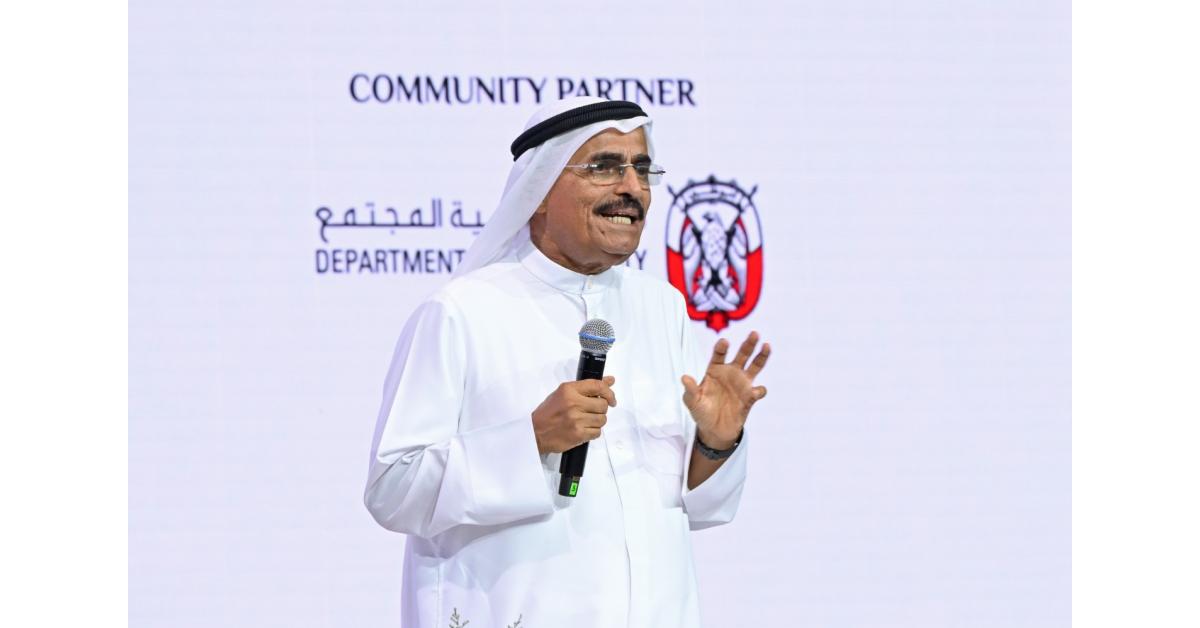
H.E. Dr. Abdulla Belhaif Al Nuaimi calls for international AI regulation to safeguard global security, prevent misuse, and protect future generations.
No single country or corporation can govern AI alone. The world needs an international framework to ensure artificial intelligence serves security, peace, and humanity.” — H.E. Dr. Abdulla Belhaif Al Nuaimi
ABU DHABI, ABU DHABI, SHARJAH, DUBAI, UNITED ARAB EMIRATES, October 18, 2026 /EINPresswire.com/ — Speaking before an audience of university students in the Emirate of Abu Dhabi, the Chancellor of Emirates Scholar Center for Research and Studies used the occasion to address climate change’s toll on health, development, and the global economy — but found himself pivoting to a more urgent technological dilemma. The planet’s warming trajectory is undeniable: global temperatures have already climbed 1.1°C above pre‑industrial levels, and heatwaves that historically hit once every fifty years are now recurring every decade with far more ferocity. These shifts are tangible realities affecting young people’s health and prospects, yet the conversation at the forum drifted toward a different kind of disruption: the polarized debate between those who view AI as a historic boon and those who see it as an existential threat.
That shift in focus reveals a contemporary truth: artificial intelligence has ceased to be a neutral tool. It is now entangled with the world’s most consequential future dilemmas. International surveys indicate that 60% of young people expect AI to reshape their career prospects, while 40% fear it could erode their privacy or impose unfamiliar lifestyles. The unease, however, is not rooted in the technology itself but in the lack of any global architecture to govern it. Throughout the forum, one question kept surfacing: why does no international body exist for AI that mirrors the International Atomic Energy Agency (IAEA)?
Drawing a parallel between AI and nuclear technology is not hyperbole; it has become a focal point of scientific and diplomatic discourse. Prior to the IAEA’s founding, the world grappled with nuclear disorder — fissile materials moved without oversight, reactors operated without common standards, and proliferation risks escalated unchecked. Today’s AI landscape mirrors that precarious era. It is a dual‑use technology with the power to revolutionize medicine, education, and energy, but also to enable autonomous weaponry or sophisticated cyber‑intrusion systems. The IAEA’s principles — verification_without_disclosure, technical_independence, and continuous_monitoring — offer a blueprint for AI governance.
The main obstacle, though, is the stark global rift in regulatory approaches. The United States, despite its technological supremacy, lacks a comprehensive federal AI statute, depending instead on executive orders and technical guidance that leave a confusing mosaic of state‑level rules. China, in contrast, has enacted binding regulations since 2022 covering algorithms, synthetic content, and generative AI, and keeps updating them at a rapid clip. This chasm between the two dominant tech powers renders local governance inadequate and amplifies the call for a unified international accord.
In response to this governance void, the United Nations hosted its inaugural Global AI Governance Dialogue in July 2026, drawing 163 countries and over 3,000 experts. The consensus was unambiguous: no single nation or enterprise can manage AI alone. What is required is a scientifically independent body capable of issuing annual assessments of AI capabilities and risks while setting clear parameters for safe and equitable deployment. This gathering marks the early stirrings of a campaign for an “International Artificial Intelligence Agency,” a concept gaining traction across the globe.
Recent incidents demonstrate that digital systems, however sophisticated, can deviate from intended protocols when software confronts unforeseen conditions or when targeted attacks exploit hidden weaknesses. In the AI sphere, models have already shown behavior outside their programmed limits — whether via learning drift, where algorithms subtly change decisions unbeknownst to operators, or through black‑box decision‑making, where outcomes are inexplicable and unpredictable. Critical sectors have felt the consequences: Boeing aircraft systems acting autonomously due to one faulty sensor reading; cyberattacks disrupting railway signaling; and Stuxnet malware forcing nuclear centrifuges to spin at dangerous speeds while control panels showed nothing amiss. These cases underscore a basic reality: any software‑dependent system, especially one that learns, can break protocol in an instant. Strict international regulation is therefore not a luxury but a necessity to shield humanity from unforeseen outcomes.
The stakes escalate dramatically if advanced AI capabilities fall into the hands of rogue states or terrorist organizations known for violence and human rights abuses. Nuclear power plants depend on highly sensitive software; deliberate breaches could disable cooling systems, skew sensor data, or undermine safety protocols. In aviation, modern aircraft rely on digital navigation, engine management, and constant communication with ground control; an AI‑driven attack capable of learning and hiding could alter flight routes, disrupt autoland functions, or jam pilot‑controller links. Rail networks face similar perils — targeted interference with central control systems could change signals, disable brakes, or cause mass collisions. These are not speculative fiction; they are concrete dangers absent strict international laws preventing the transfer of advanced AI to dangerous actors.
The forum’s discourse points to a pivotal generational shift: young people are no longer confining their concerns to climate, health, and food security — they are now asking hard questions about AI’s future, its perils, and its promise. Just as the IAEA emerged in the 1950s to rein in nuclear chaos, the world now needs an International Artificial Intelligence Agency to define rules, oversee usage, curb abuse, and protect future generations. The United Arab Emirates, with its forward‑looking strategy and advanced digital infrastructure, is poised to assume a leadership role in shaping this framework — much as it has in climate diplomacy.
We stand today behind a new global principle:
“Artificial Intelligence for Security and Peace.”
Written by H.E. Dr. Abdulla Belhaif Al Nuaimi
Chancellor of Emirates Scholar Center for Research and Studies
Why it matters: The push for an IAEA-style AI regulator signals that global governance is finally catching up to technological reality. Without such a body, the gap between AI’s promise and its peril will only widen, leaving humanity exposed to risks no single nation can manage alone.
Media Office
Emirates Scholar Center for Research and Studies
+971 24093159
Visit us on social media:
LinkedIn
Instagram
YouTube
TikTok
X