As global markets increasingly reward cleaner and more efficient operations, resource-rich nations are being forced to rethink how they extract value from their reserves. A new analysis from Oxford Business Group and Petroleum Development Oman captures how the sultanate is navigating this shift.
For hydrocarbon-dependent economies such as Oman, this means maximising the value of existing resources while also pursuing economic diversification and developing lower-carbon industries”— Aflah Al Hadhrami, Managing Director of PDO
MUSCAT, OMAN, October 18, 2026 /EINPresswire.com/ — The global energy landscape is undergoing a fundamental shift, with producers now judged not just on output but on how efficiently and cleanly they operate. For a nation like Oman, this evolution presents both a challenge and an opening to bolster the competitiveness of its existing production while advancing national sustainability goals and economic diversification efforts.
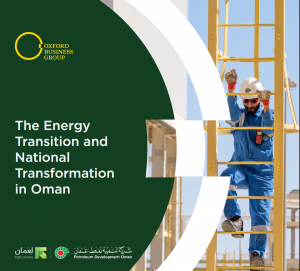
The newly released report, titled ‘The Energy Transition and National Transformation in Oman,’ is a collaborative effort between Oxford Business Group (OBG) and Petroleum Development Oman (PDO). It examines how the sultanate is aligning its energy sector with Oman Vision 2040 and its national net-zero targets, focusing on operational transformation, digitalisation, emissions management and institutional coordination as drivers of lower-carbon production and renewable energy growth.
The publication highlights a changing competitive environment where environmental performance is gaining traction alongside traditional metrics like fiscal stability and energy security. While hydrocarbons remain a cornerstone of Oman’s economy, the report notes that emissions intensity, flaring reduction, methane management and credible reporting are becoming crucial factors for market access, financing and capital allocation, shaping the sector’s long-term resilience.
Digitalisation is a central theme throughout the report. The adoption of real-time operational data, artificial intelligence and advanced analytics is shifting the industry away from periodic reporting and toward continuous, data-driven performance management. This approach enables operators to identify rising costs, underperforming assets and areas needing intervention, fostering greater efficiency and more informed decision-making.
Governance, workforce development and cross-sector collaboration are also examined as essential components for achieving measurable progress. National strategies and institutional frameworks are seen as the foundation for aligning operational priorities with long-term objectives, while international partnerships and technology adoption are key to advancing emissions reduction, efficiency and diversification.
In an interview featured in the publication, Aflah Al Hadhrami, Managing Director of PDO, articulates the balancing act facing hydrocarbon producers today.
“Producers face the dual challenge of maintaining cost competitiveness while meeting increasingly stringent emissions-reduction commitments,” Al Hadhrami explains. “For hydrocarbon-dependent economies such as Oman, this means maximising the value of existing resources while also pursuing economic diversification and developing lower-carbon industries. Both processes require significant capital, technological investment and, above all, long-term commitment for greater sustainability,” he added.
Dana Agarbicean, OBG’s Country Director for Oman, emphasised how operational performance is now intrinsically linked to national competitiveness.
“This report highlights that Oman’s energy transition is not solely defined by the deployment of new energy sources. By strengthening operational efficiency, applying digital technologies, improving emissions management and reinforcing coordination across institutions, the sultanate is enhancing the competitiveness and resilience of its hydrocarbons sector while supporting its wider sustainability and diversification objectives,” she said.
The Energy Transition and National Transformation in Oman is now available to view and download at https://oxfordbusinessgroup.com/reports/exploring-the-role-of-energy-transformation-in-oman-operational-and-economic-resilience-research-analysis-focus-report/
Marc-André de Blois
About Oxford Business Group
Visit us on social media:
LinkedIn
Facebook
YouTube
X
Why it matters: This report signals that Oman’s energy strategy is moving beyond simple production targets. For investors and industry watchers, the emphasis on efficiency, digitalisation and emissions management suggests that long-term competitiveness in the region will be defined by how well producers integrate sustainability into their core operations.