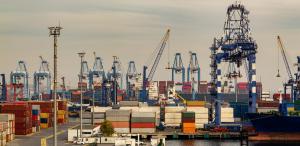
For any company that has ever tried to coordinate a shipment from multiple factories in China, the pain point is familiar: too many vendors, too much paperwork, and too many fingers to point when a container gets stuck at port. That fragmented reality is precisely what Shenzhen Senghor Sea & Air Logistics Co., Ltd. is built to dismantle, offering a single-window framework that wraps everything from factory pickup to final delivery into one manageable process.
SHENZHEN, GUANGDONG, CHINA, October 11, 2026 /EINPresswire.com/ — The rapid growth of international procurement has created a specific set of logistical headaches for overseas buyers who source industrial and commercial goods from China. In a standard purchasing cycle, an importer typically juggles multiple manufacturing facilities, independent domestic trucking operations, local customs brokers, ocean carriers, and separate destination clearance agents. This disjointed approach often results in communication breakdowns, mismatched documentation, and unclear accountability when delays surface at ports of loading or discharge. To smooth out these operational friction points, the role of a China custom freight forwarder solution provider has become increasingly essential. By merging these scattered steps into a single-window service management model, specialized logistics firms absorb the operational complexity, giving international buyers greater predictability over their supply chains.
Among the logistics firms tackling these challenges, Shenzhen Senghor Sea & Air Logistics Co., Ltd. offers integrated transportation frameworks that link Chinese manufacturing hubs with markets worldwide. Instead of relying on rigid, off-the-shelf shipping schedules, Senghor Logistics develops customizable logistics and transportation solutions aligned with the distinct operational realities of Chinese foreign trade export enterprises and overseas buyers. Managing international sea freight, international air freight, international railway transport, and international express services, the company establishes door-to-door transit pipelines that include origin pickup, export customs brokerage, destination customs clearance, and final mile delivery.
Optimizing Supply Chains Through Multi-Vendor Cargo Consolidation
For international buyers sourcing from regional industrial clusters such as the Pearl River Delta or the Yangtze River Delta, managing shipments from distinct factories carries substantial administrative overhead. When an American importer purchases electronic components, hardware, or consumer goods from four or five separate vendors, arranging individual Less-than-Container Load (LCL) shipments leads to repetitive local port fees, separate documentation charges, and fragmented tracking. Shenzhen Senghor Sea & Air Logistics Co., Ltd. tackles this inefficiency by leveraging dedicated warehousing infrastructure in Shenzhen, including proximity to the Yantian port facility, which spans nearly 20,000 square meters.
At this central hub, incoming cargo from various suppliers undergoes systematic receiving, quality verification, and product labeling according to destination marketplace standards. Technicians then execute strategic cargo consolidation, merging multiple smaller batches into a single Full Container Load (FCL). This approach allows the freight forwarder solution provider to issue a single Master Bill of Lading (MBL) and process a unified export customs declaration for the entire shipment. By removing the need for multiple individual entries, this consolidation model prevents the buildup of redundant freight fees and simplifies terminal handling processes at destination ports.
Synchronized Export and Import Customs Compliance
Navigating international trade compliance demands precise documentation to avoid costly cargo detentions at border checkpoints. With customs regulations remaining stringent across major trade lanes, any mismatch in commercial invoices, packing lists, or harmonized system (HS) codes can trigger intensive physical examinations. Senghor Logistics operates with Non-Vessel Operating Common Carrier (NVOCC) status, a regulatory designation that authorizes the firm to issue its own bills of lading and maintain direct service contracts with major ocean carriers, ensuring stable space allocations.
The custom freight forwarder solution provider employs an in-house customs brokerage team within China to manage export clearances and secure essential trade documentation, including Certificates of Origin such as CO or Form A, which facilitate preferential tariff treatments for overseas buyers. For shipments destined for North American ports, the documentation team handles the timely transmission of Importer Security Filings (ISF) and Automated Manifest System (AMS) data within the mandatory regulatory windows. On the destination side, the firm collaborates with established World Cargo Alliance (WCA) partner agencies to execute seamless Delivery Duty Unpaid (DDU) and Delivery Duty Paid (DDP) clearances. This comprehensive oversight ensures that incoming cargo transitions directly from the marine terminal to the domestic delivery network without requiring the buyer to engage independent secondary customs brokers.
Proactive Milestone Tracking and Risk Mitigation Protocols
Operational transparency is a core requirement for modern supply chain management, where inventory planning depends heavily on predictable arrival windows. During the initial planning phase, Senghor Logistics provides clients with a tiered matrix featuring slow, medium, and fast transit options, allowing importers to balance budgetary constraints against inventory urgency. Once a shipment enters the operational pipeline, the cargo management team initiates a standardized milestone notification protocol.
This communication structure monitors six critical operational junctures: initial cargo pickup, warehouse receiving, vessel loading, port arrival, customs clearance verification, and final door delivery. Importers receive updated information through real-time feedback from Senghor Logistics, reducing the burden on customers to personally follow up. When supply chain disruptions occur, such as seasonal port congestion, severe weather events, or random customs inspections, the custom freight forwarder solution provider deploys pre-established contingency protocols. By issuing early alerts alongside alternative routing or expedited intermodal solutions, the firm assists businesses in maintaining inventory continuity despite unexpected transport bottlenecks.
Balanced Intermodal Solutions for Global Distribution
As international trade pathways require greater flexibility, relying on a single transport mode can limit a company’s ability to respond to market fluctuations. To support diverse procurement strategies, Shenzhen Senghor Sea & Air Logistics Co., Ltd. maintains balanced capacities across four primary transport sectors. Sea freight solutions cater to high-volume, cost-sensitive industrial commodities, while international air freight services support time-critical components and high-value merchandise requiring rapid replenishment cycles.
For land-linked trade lanes across Eurasia, international railway transport provides a reliable middle-ground option, balancing speed and cost efficiency relative to air and traditional maritime routes. Additionally, integrated international express services handle small-batch shipments and critical commercial samples requiring rapid door-to-door delivery. By aligning these diverse transportation modes with the specific commercial requirements of international trade, Senghor Logistics removes systemic inefficiencies from cross-border transactions. Importers seeking to optimize their logistics operations can access comprehensive supply chain assessments and customized transport strategies via the company’s digital platform at https://www.senghorshipping.com/.
Why it matters: As global sourcing becomes more complex, the ability to consolidate logistics under one accountable partner is no longer a luxury—it’s a competitive necessity. For importers, partnering with a forwarder that manages compliance, consolidation, and contingency planning in-house can mean the difference between a smooth delivery cycle and a costly, tangled delay.
Senghor Logistics
Senghor Logistics
Visit us on social media:
LinkedIn
Instagram
Facebook
YouTube
TikTok
Other