A workplace case demonstrates how carpet evaluation, focused treatment, and access preparation assist Oahu facility managers in weighing options beyond full replacement.
HONOLULU, HI, UNITED STATES, October 6, 2026 /EINPresswire.com/ — When commercial flooring suffers from significant staining or fading, facility managers must determine whether the appearance can be salvaged or if a full replacement is the only route. Renue Hawaii is showcasing a prior corporate project to illustrate why exploring cleaning, spot remediation, and color-restoration techniques should precede any decision to replace.
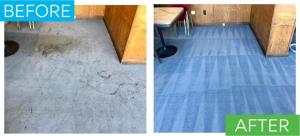
The undertaking involved hot water extraction alongside focused stain removal. Renue Hawaii reports that these measures enhanced the carpet’s look, enabling the current flooring to stay operational instead of being swapped out.
The provided before-and-after imagery reveals noticeably fewer dark blemishes and a more consistent look in the displayed workspace. This case underscores the importance of diagnosing the root cause before choosing a course of action.
For occupied Oahu sites, that evaluation must also factor in how crews will access the workspace, how the service will integrate with daily routines, and what provisions are needed for the drying phase.
Pinpoint the Issue Prior to Choosing a Remedy
Commercial carpeting can develop an inconsistent look from multiple sources. Ground-in dirt, isolated marks, pigment fading, and physical deterioration may appear alike at a distance, yet each demands a unique solution.
Deep restorative cleaning tackles built-up grime and residue. Focused stain treatment addresses discoloration from spills or other agents. In cases where bleach or chemical contact has stripped the carpet’s hue, Renue Hawaii provides targeted dye repair for appropriate flooring—a capability that washing by itself cannot offer.
The evaluation determines whether deep cleaning, spot treatment, dye correction, or a blend of these can enhance the existing carpet. Replacement becomes relevant only when structural decline or other harm makes restoration unfeasible.
When applicable, a small test patch can set realistic expectations ahead of a full-scale effort. The goal is to match the right solution to each condition instead of relying on a single repeated cleaning method.
The corporate project serves as one instance of carpet preserved through extraction and stain work. Outcomes hinge on the carpet’s state, and neither washing nor dye repair can restore fibers that are physically worn or fix every kind of damage.
Assess Cleaning and Color Repair Before Committing to New Flooring
A localized aesthetic issue does not always necessitate replacing the whole carpeted zone. A blemish might yield to focused treatment, while a qualifying bleach mark or faded patch could be a candidate for targeted dye correction.
These approaches should be weighed against the broader state of the surrounding carpet. The essential query is whether treatment can deliver a satisfactory outcome aligned with the property’s visual expectations and ongoing usage.
A thorough comparison goes beyond just the service quote and the cost of fresh carpet. Replacement may entail tearing out old flooring, waste removal, relocating furniture, installation, and arranging entry to the impacted space. Cleaning and color repair carry their own preparation, treatment, and reoccupancy timelines.
Facility managers should assess proposals that specify the zones involved, the techniques planned, known constraints, and scheduling. This approach clarifies where treatment adds value and where an alternative becomes necessary.
Moving Equipment to the Workspace
For an upper-level office or a busy commercial site, gear accessibility forms part of the cleaning equation.
Interior offices, gated entrances, shared hallways, and tight vehicle access can hinder setup. Extended hose runs from an outside truck might traverse spaces used by staff, visitors, tenants, or patrons.
Renue Hawaii employs professional portable extraction units that can be transported directly to the floor being serviced. Where the building allows, this lessens reliance on external hose pathways and offers a workaround when truck access is not viable. Truck-mounted extraction stays a fitting choice for properties with convenient exterior access.
The choice of equipment should align with the required treatment, the building’s layout, available power and water, and moisture-extraction needs. Portable units also demand coordination of electrical supply, water sources, wastewater disposal, and safe transit through the premises.
Examining these factors beforehand helps create a feasible arrangement and flag possible disruptions.
Organize for Service and Reoccupancy
An office, hotel, condo common area, restaurant, or retail venue often has narrow windows for disruptive activity. Early conversations should clarify which spaces will be touched, which pathways must stay open, and how the work fits with normal operations.
Furniture relocation, defined work zones, and drying protocols belong in the proposed scope. Drying time depends on the carpet type, the treatment used, moisture extraction, airflow, and indoor climate. Expectations for returning to use should thus reflect the specific job.
Pictures of impacted zones, past cleaning records, and known entry limitations can sharpen the discussion. Managers should also flag operational deadlines or other factors that might influence the schedule.
Link Restoration to Routine Upkeep
Following restorative work, the next step is preserving the gains. Consistent vacuuming, quick response to spills, and appropriate periodic cleaning help control dirt accumulation between deeper services.
Maintenance intervals should mirror actual foot traffic. Entryways, elevator landings, and busy corridors may require more frequent attention than quieter sections of the same building.
Manufacturer care guidelines and applicable warranty provisions should also steer treatment choices. Available product specs and logs of service dates, areas handled, and techniques employed contribute to an orderly maintenance record. Such documentation does not assure warranty coverage; the governing terms and the manufacturer’s assessment remain decisive.
Local Presence With Dependable Technical Backup
Renue Hawaii, operating under the name Renue Systems of Oahu, pairs local service with specialized gear, cleaning formulas, and backing from Renue Systems, Inc., headquartered in Lombard, Illinois.
Established in 1991, Renue Systems contributes over thirty years of hospitality and commercial deep-cleaning know-how. The firm notes that its company-run Chicagoland branch refines services and trials new equipment and cleaning agents. Its franchise assistance includes training, operational direction, and dedicated cleaning platforms.
Prior to endorsing carpet replacement, Oahu facility managers can reach out to Renue Hawaii to examine deep cleaning, focused stain treatment, and localized dye repair for bleach marks or other pigment loss. Send photos, past treatment history, and access needs to start outlining a practical work plan.
Discover more about Renue Hawaii’s commercial carpet cleaning services and arrange a site visit.
Matthew Mullins
Renue Hawaii
+1 808-224-7936
oahu@renuehawaii.com